Theodore Roosevelt Presidential Library
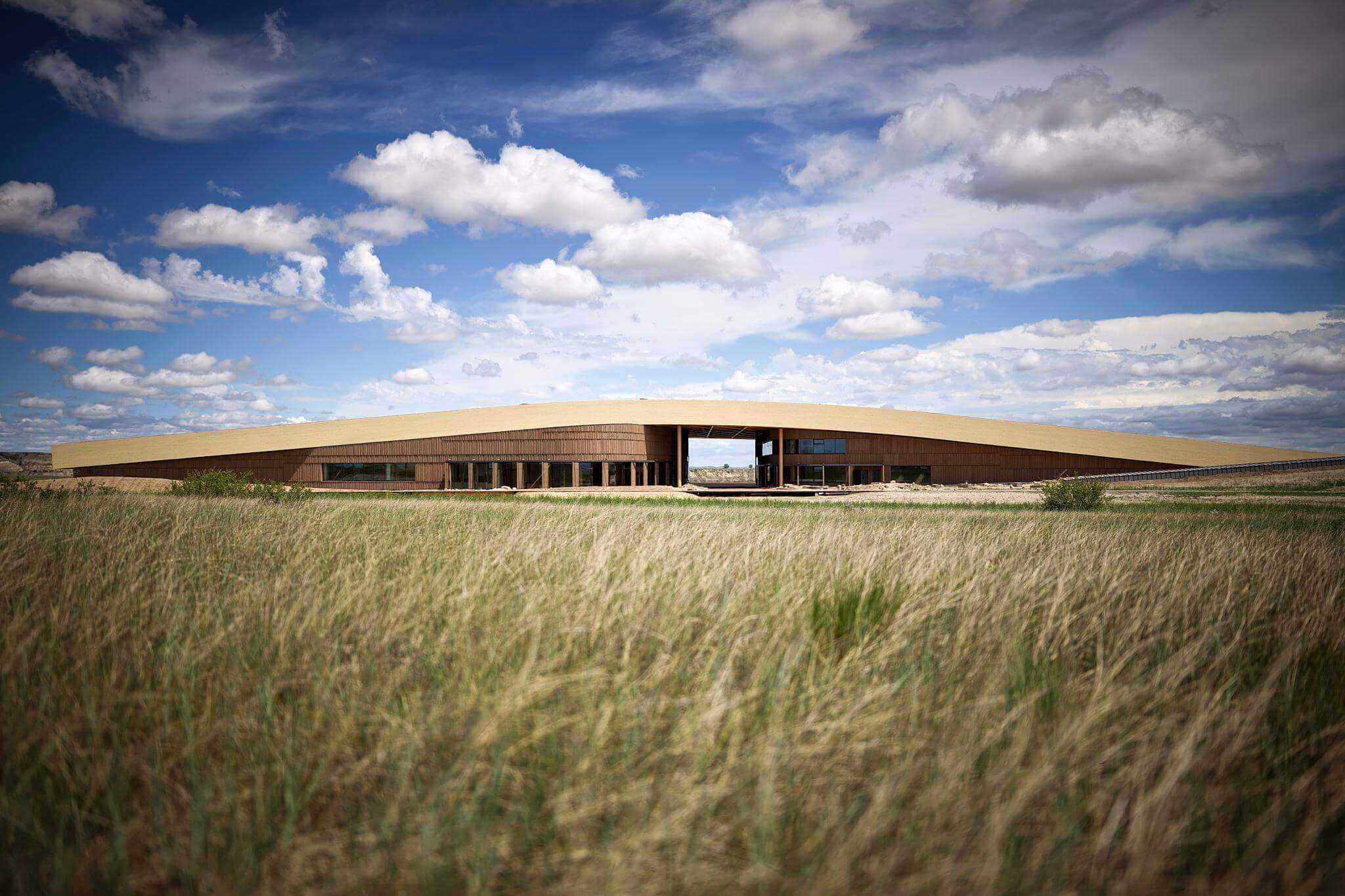
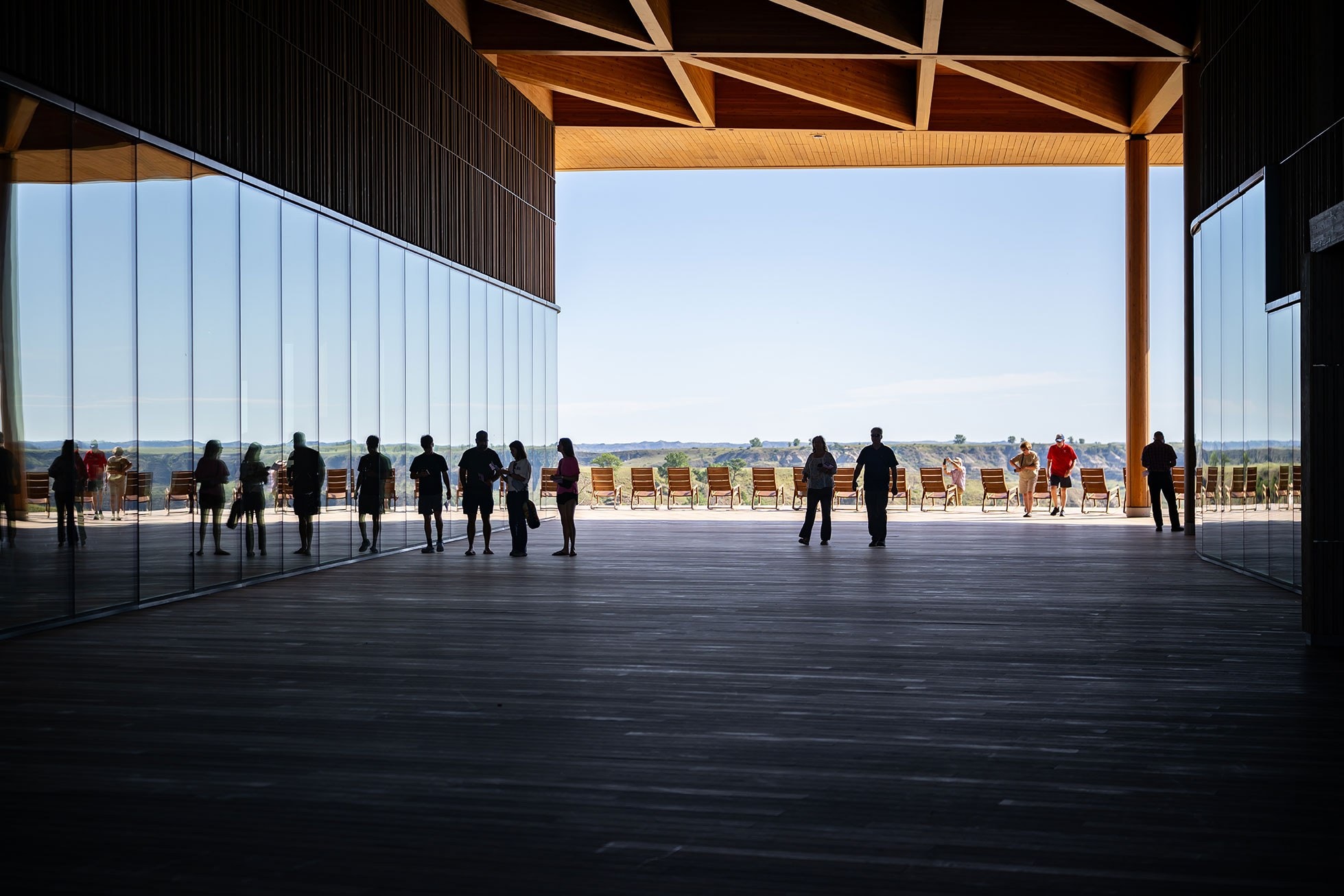
The Theodore Roosevelt Presidential Library set out to create a living biography of America’s 26th president. The goal was ambitious: turn 40,000 square feet of largely unfinished space into eight immersive Chapter Galleries that place visitors inside the moments, landscapes and ideas that shaped Roosevelt, all ready for an immovable July 4, 2026, opening tied to the nation’s 250th anniversary.

A Larger-Than-Life Legacy, Brought to Life
Actor Nick Offerman serves as a familiar voice throughout much of the museum, narrating videos that help carry visitors from one chapter of Roosevelt’s life to the next. DI’s hand worked and finished canoes give guests an immersive seat in an Offerman narrated “Amazon” gallery emerging them in the “River of Doubt” journey filled with adventure, turmoil and illness. That continuity helps connect the larger-than-life environments with the more personal side of his story, giving visitors a guide as they follow Roosevelt from his formative years to the presidency and the legacy he left behind.
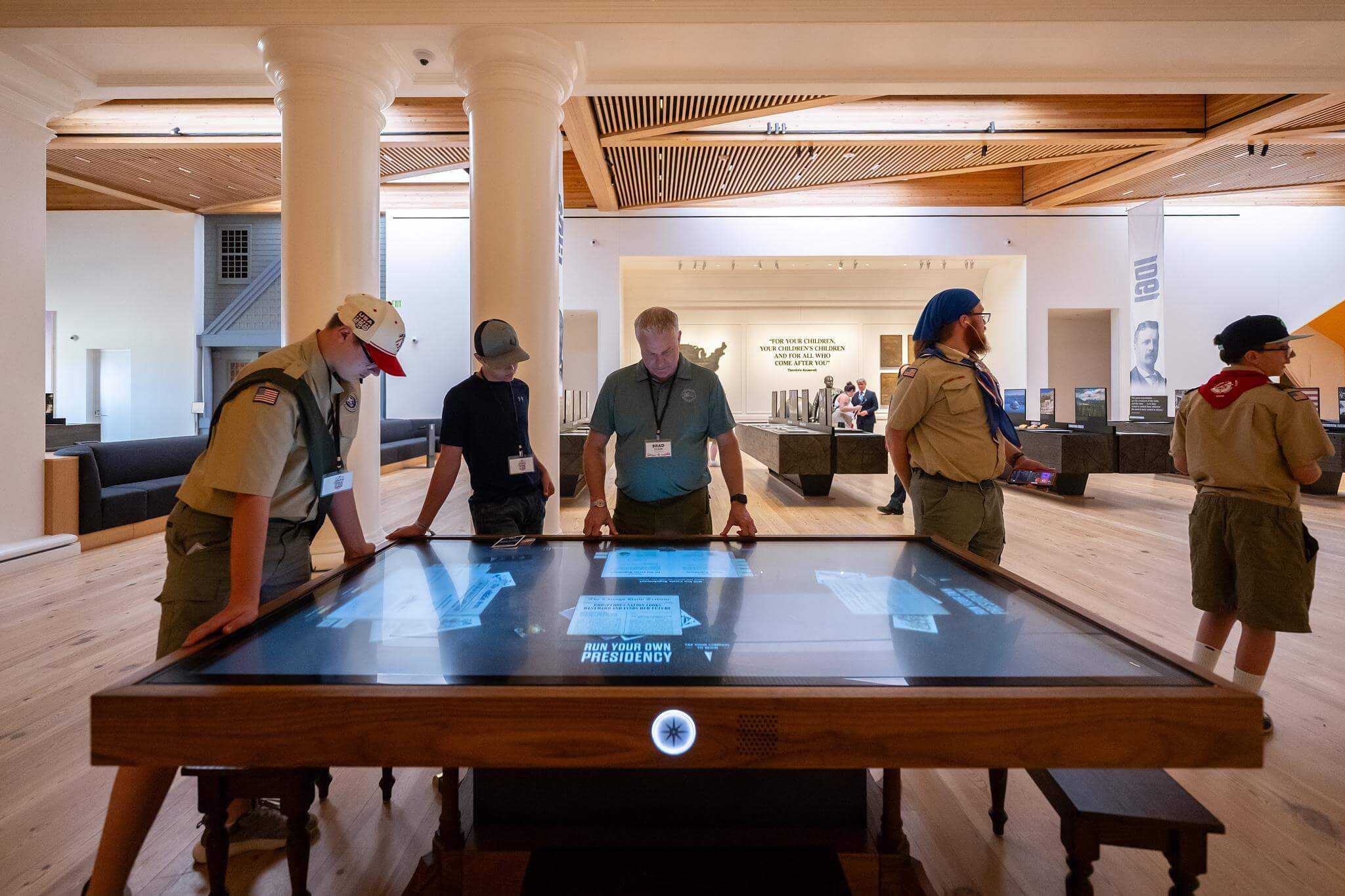
Entry
After checking in, visitors receive an RFID-enabled tag that follows them throughout the museum, activating media, props and interactive moments along the way. From there, they’re greeted by a large brownstone façade inspired by Roosevelt’s New York City birthplace. Media plays within the windows before visitors pass through the doorway and into a recreated period parlor filled with artifacts, props and storytelling from his childhood.
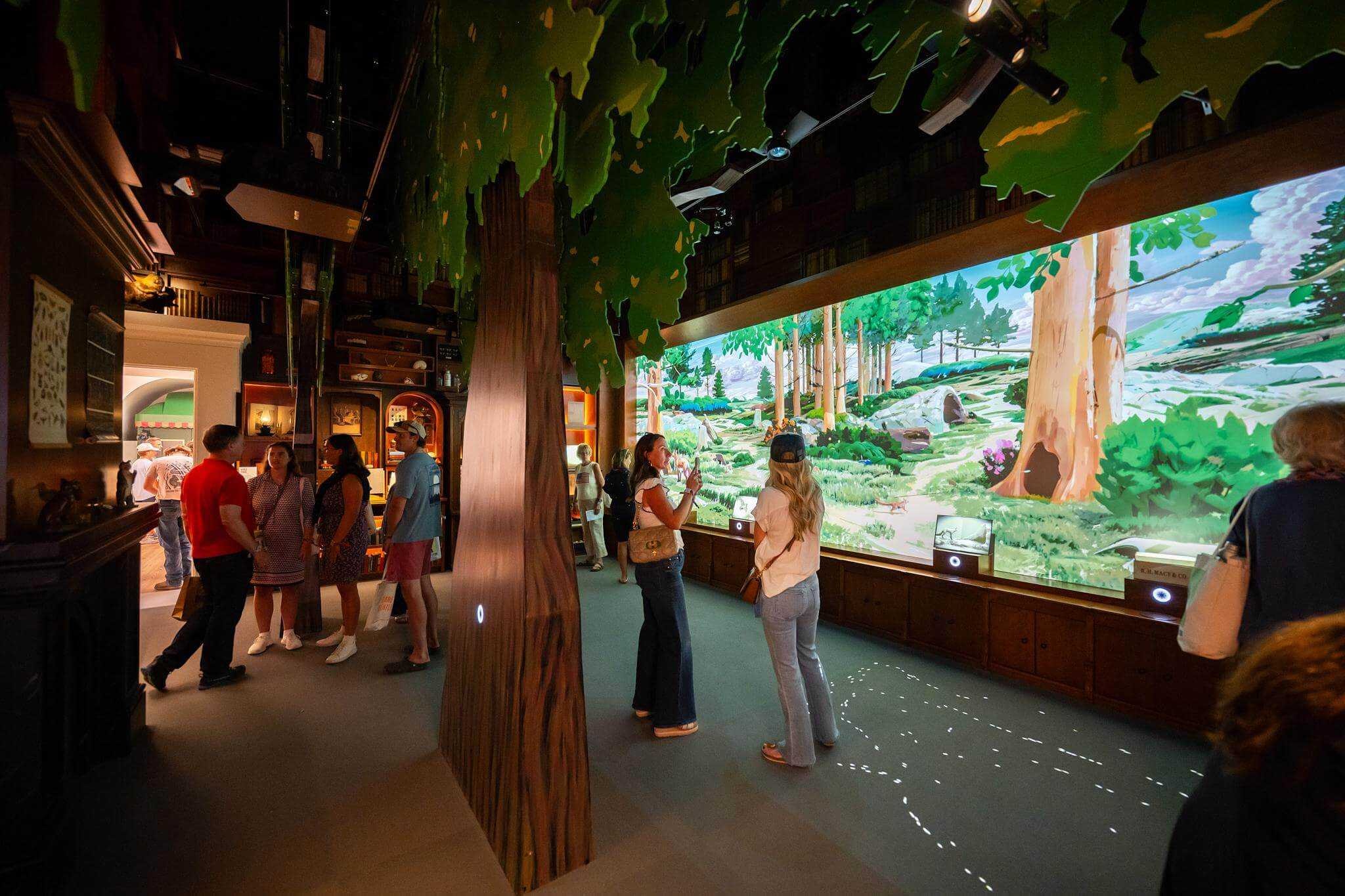
Growing Up
The next space continues the natural traction of Roosevelt’s life. A densely packed natural history-inspired space explores Roosevelt’s early fascination with nature, science and exploration. Books and objects fill the room from floor to ceiling while projections, hidden touchpoints and interactive triggers reward visitors for looking a little closer.
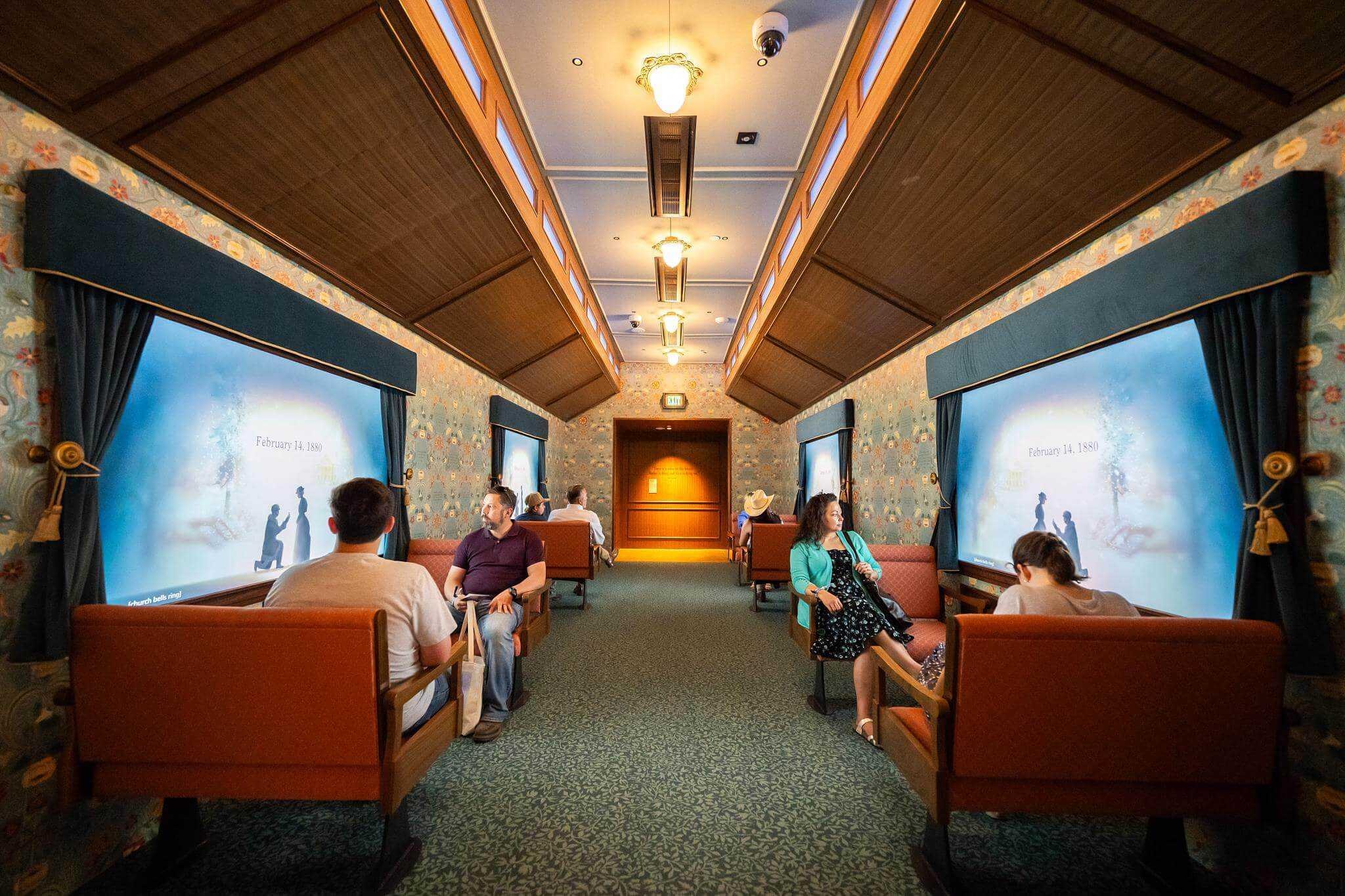
Journey West
As Roosevelt’s story becomes more personal, the environment shifts. Visitors step into a recreated train representing his journey west and the love story with his first wife Alice leading into the heartbreaking deaths of his wife and mother on the same day. From there, they enter a deliberately dark and restrained gallery centered on one of the lowest points of his life. The exhibit includes Roosevelt’s original diary containing the words, “The light has gone out of my life” along with a dark, bold “X” centering the immersive storytelling in a deeply personal artifact.
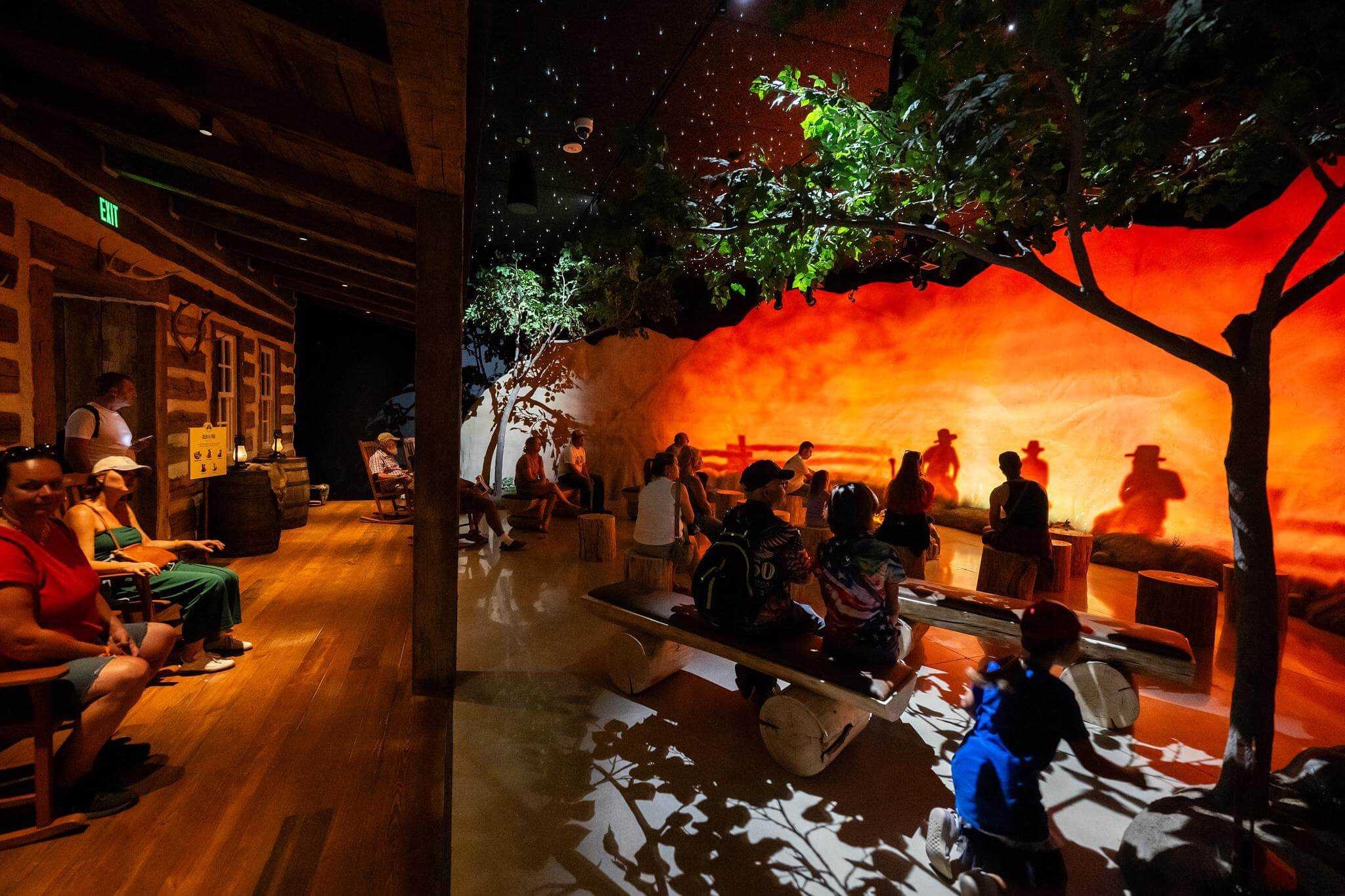
The Badlands and Conservation
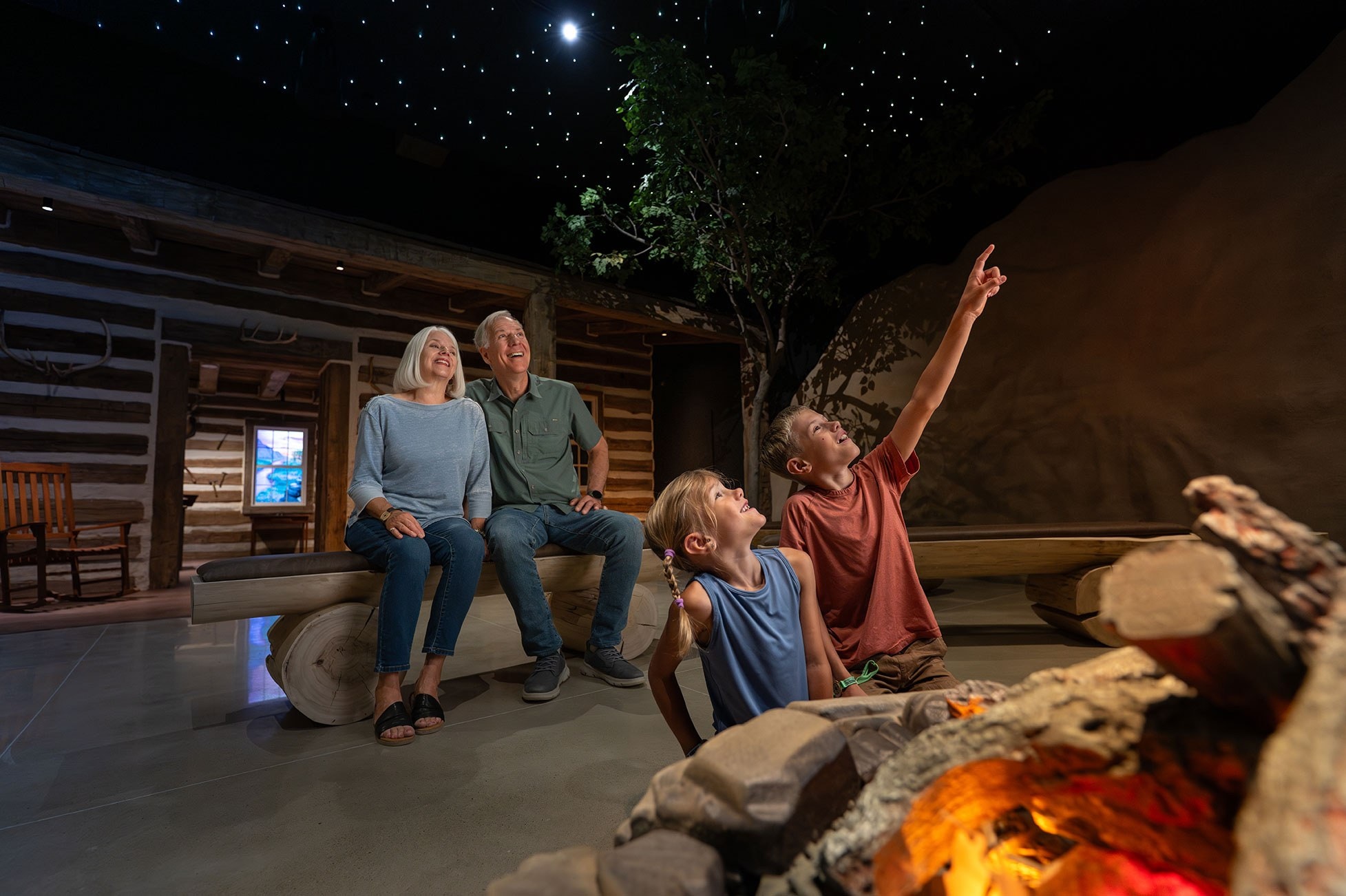
The mood changes again as visitors reach the Badlands of Medora, North Dakota. A recreation of Roosevelt’s Elkhorn Ranch cabin includes period-inspired furnishings, props, media and interactive viewing devices that reveal scenes from life on the plains. Visitors then continue into a large scenic interpretation of the Badlands, complete with molded rockwork, a twinkling overhead night sky, a central campfire and gathering space. It becomes a communal storytelling moment that connects the landscape to Roosevelt’s personal recovery and his growing ideas around conservation.
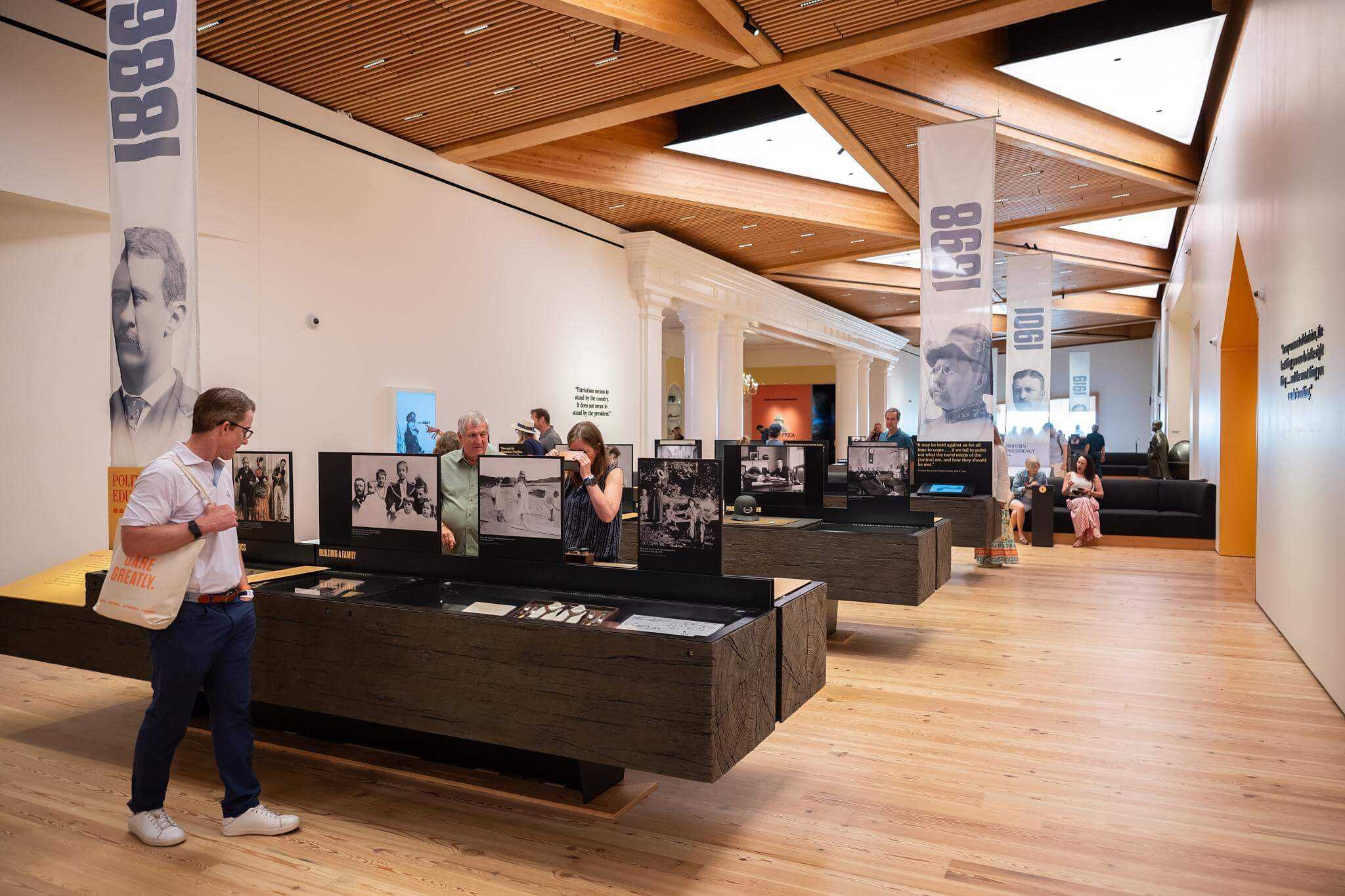
Main Gallery
Between the immersive moments, more traditional narrative galleries give visitors space to dig deeper. Flexible artifact cases hold historic objects and supporting content and were designed so artifacts can be rotated over time. That balance between cinematic environments and quieter historical interpretation keeps the experience from feeling like either a traditional museum or a themed attraction. Each has a role in moving Roosevelt’s story forward.
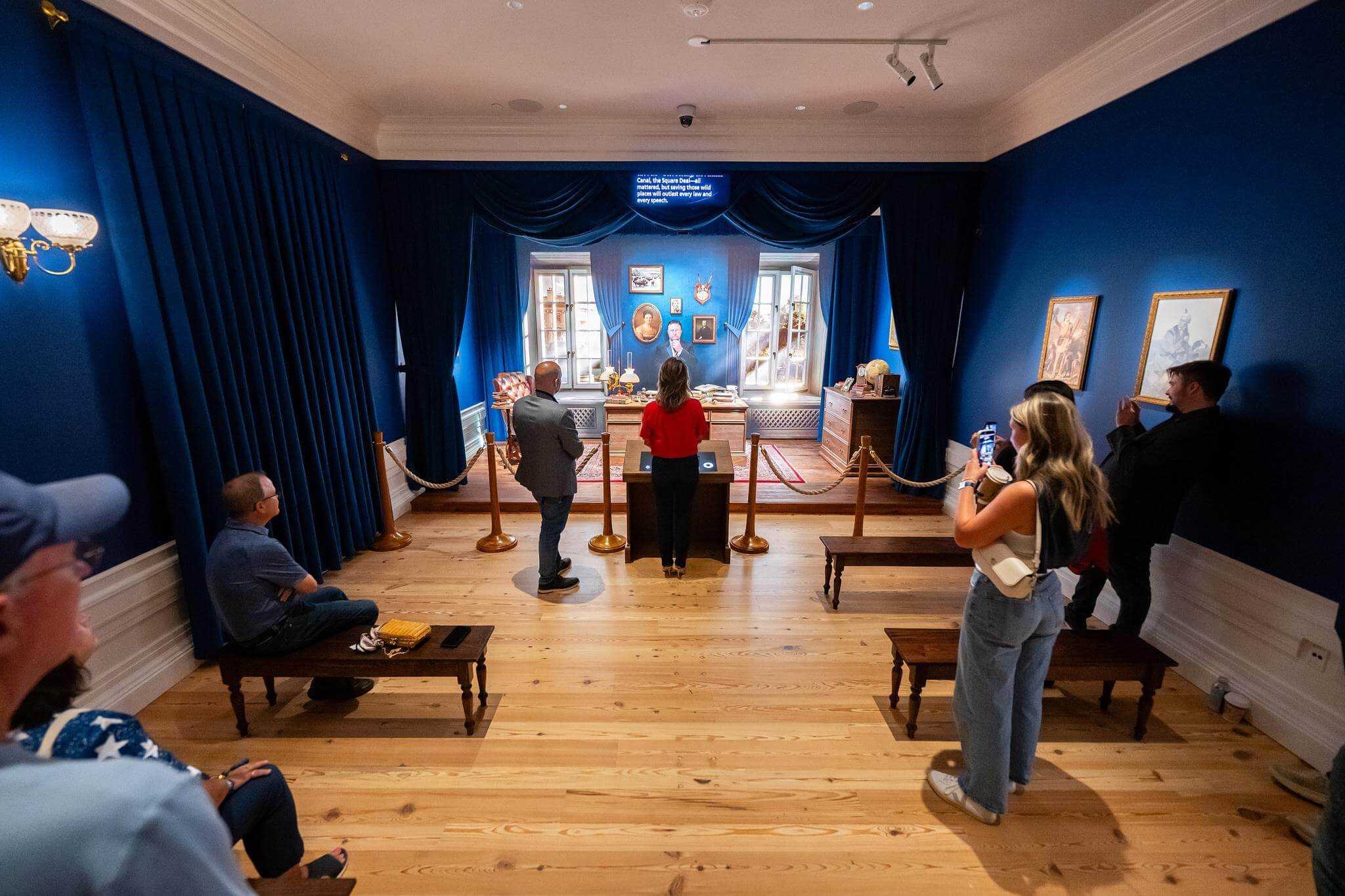
The Presidency and Beyond
As the story moves from Roosevelt’s ranching years through the Rough Riders, vice presidency and eventually the White House, the experience continues to layer physical storytelling with media and narration.
Parnter Testimonial
“DI’s ability to orchestrate complex fabrication, technology and storytelling elevated this project beyond a traditional museum. The result is a living, breathing embodiment of Roosevelt’s life, one that invites participants to celebrate both the man and the nation he helped define.”
Edward F. O’Keefe, CEO
Theodore Roosevelt Presidential Library