University of Nebraska Medical Center: McGoogan Health Sciences Library

The University of Nebraska Medical Center (UNMC) set out to transform the historic Wittson Hall into the McGoogan Library Wigton Heritage Center, a space that could do more than display artifacts. The goal was ambitious: create an immersive, multi-level experience that educates visitors, honors the institution’s legacy and functions as an active part of campus life.
Project Details

Building the Future of Medical Learning

Founded in 1869, the University of Nebraska Medical Center is a nationally recognized medical research university and teaching hospital. When UNMC transformed its historic Wittson Hall and the renowned Leon S. McGoogan Health Sciences Library into a collaborative Student Learning Center and Commons, it partnered with DI to create exhibits that celebrate the institution’s legacy and inspire future generations. DI helped shape the exhibit vision and developed fundraising materials that supported donor engagement. Spanning three floors, the exhibits use digital media, graphics, and interactive experiences to showcase UNMC’s rich history, pioneering achievements, and influential leaders while engaging visitors.


Challenge

The University of Nebraska Medical Center (UNMC) set out to transform the historic Wittson Hall into the McGoogan Library Wigton Heritage Center—a space that could display more than just artifacts. The goal was to create an immersive, multi-level experience that educates and honors the institution’s legacy while functioning as an active part of campus life. 

The challenge was balancing archival preservation and storytelling, all within a renovated academic library setting. The experience needed to resonate with a wide audience—students rushing between classes, families visiting campus, high-profile donors and university leadership—while also serving as a destination for events and tours. And because the space would be publicly accessible and heavily trafficked, it needed to remain secure and easy to maintain.


SOLUTION

DI worked closely with UNMC leadership, including the Chancellor’s Office, to build a strategic narrative framework that honored the university’s past while looking toward its future. That vision guided the design of a layered, three-floor experience that evolves as visitors move through the space. 

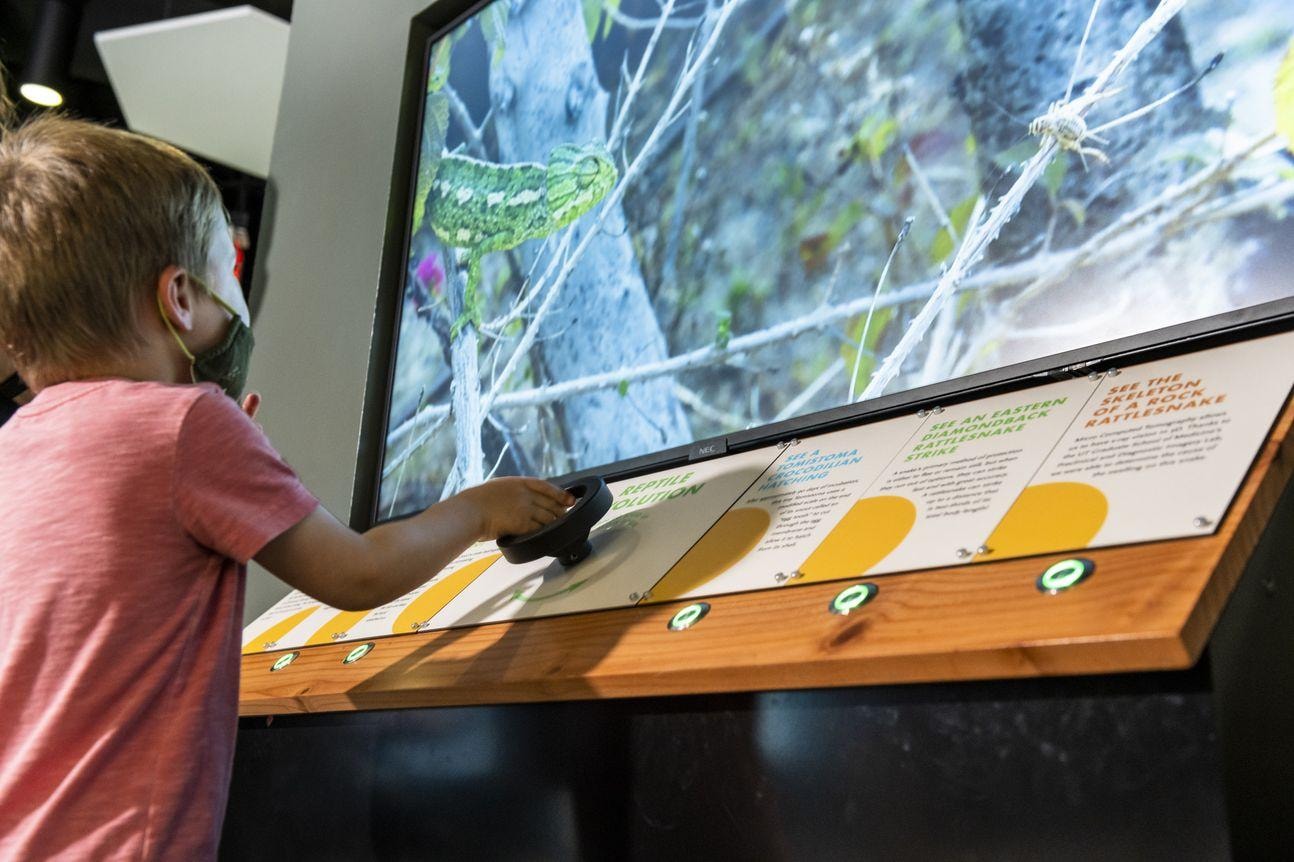
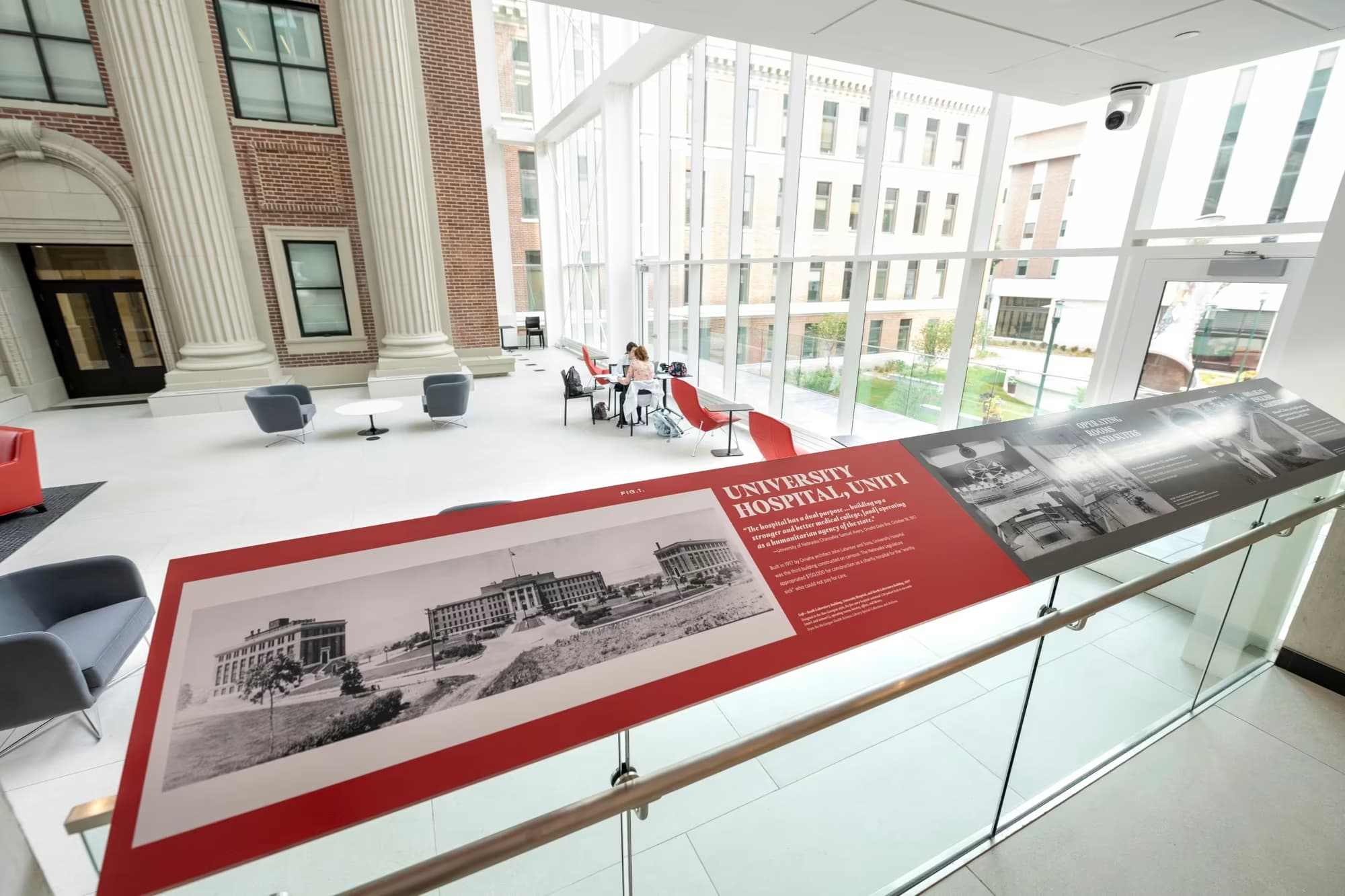
The first floor, a high-traffic area, introduces visitors to UNMC’s mission and milestones through large-scale digital displays and graphic storytelling. These visually arresting moments were designed to immediately capture attention, acting as an open invitation to explore the space further.
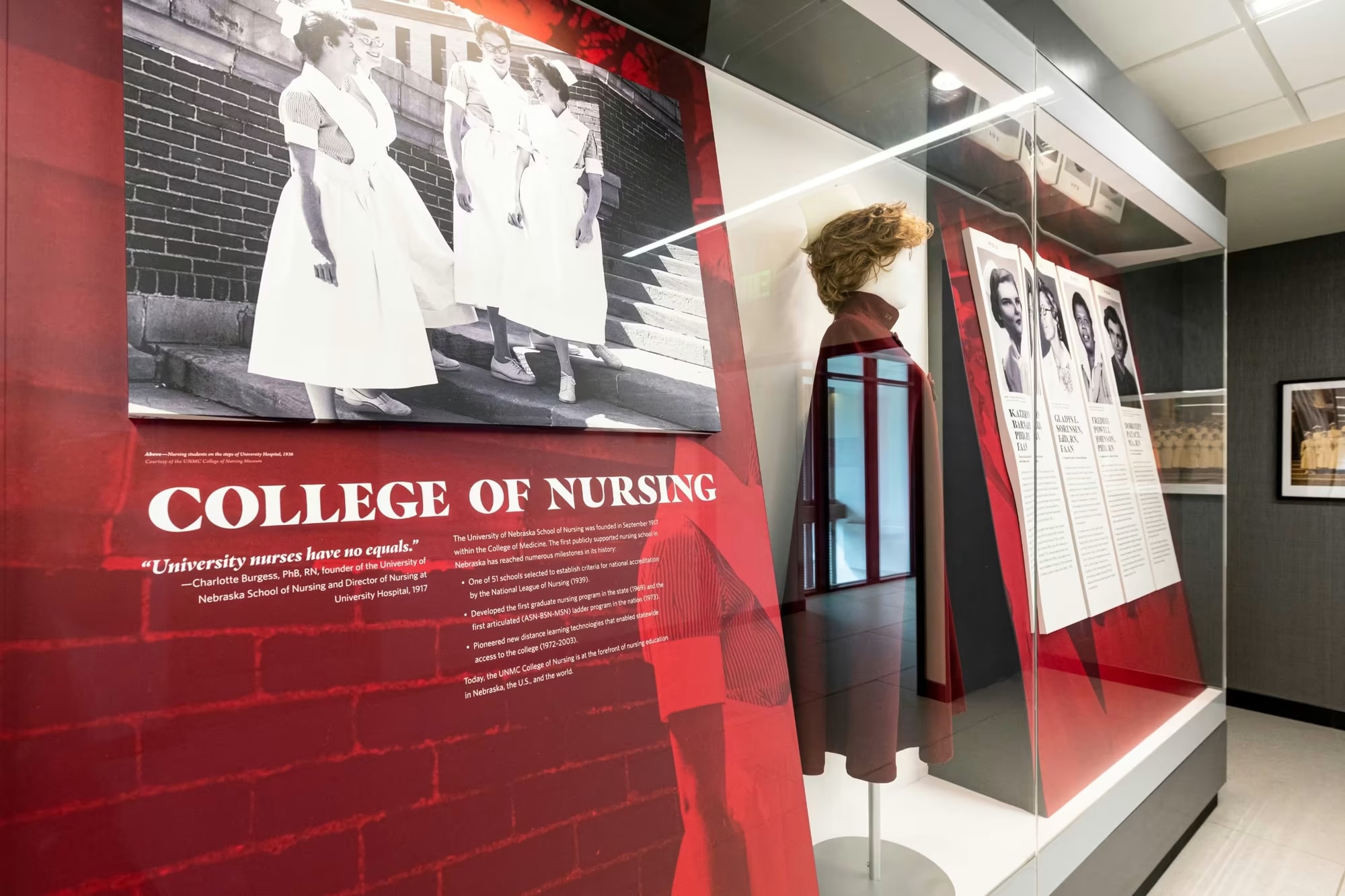
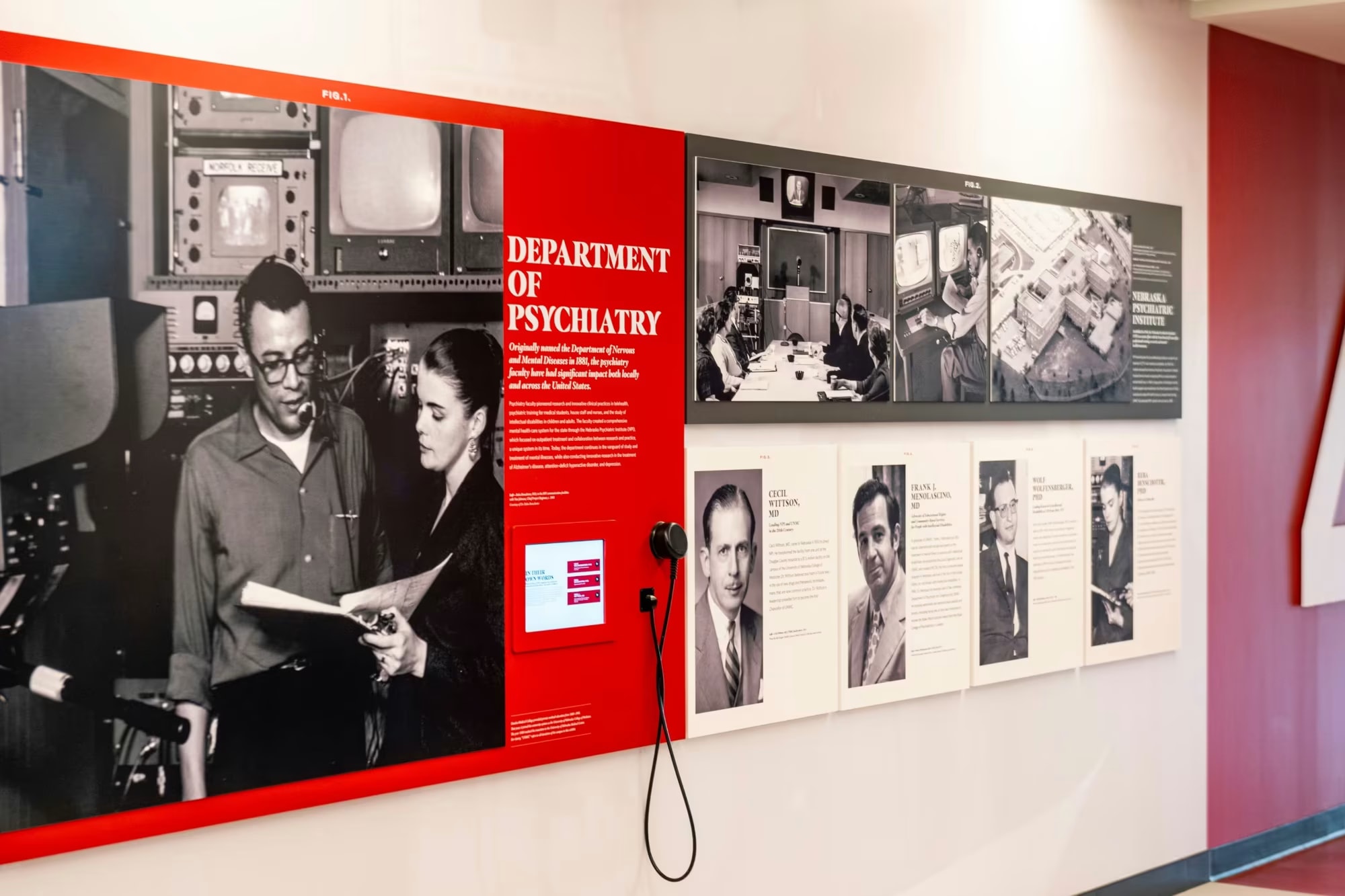
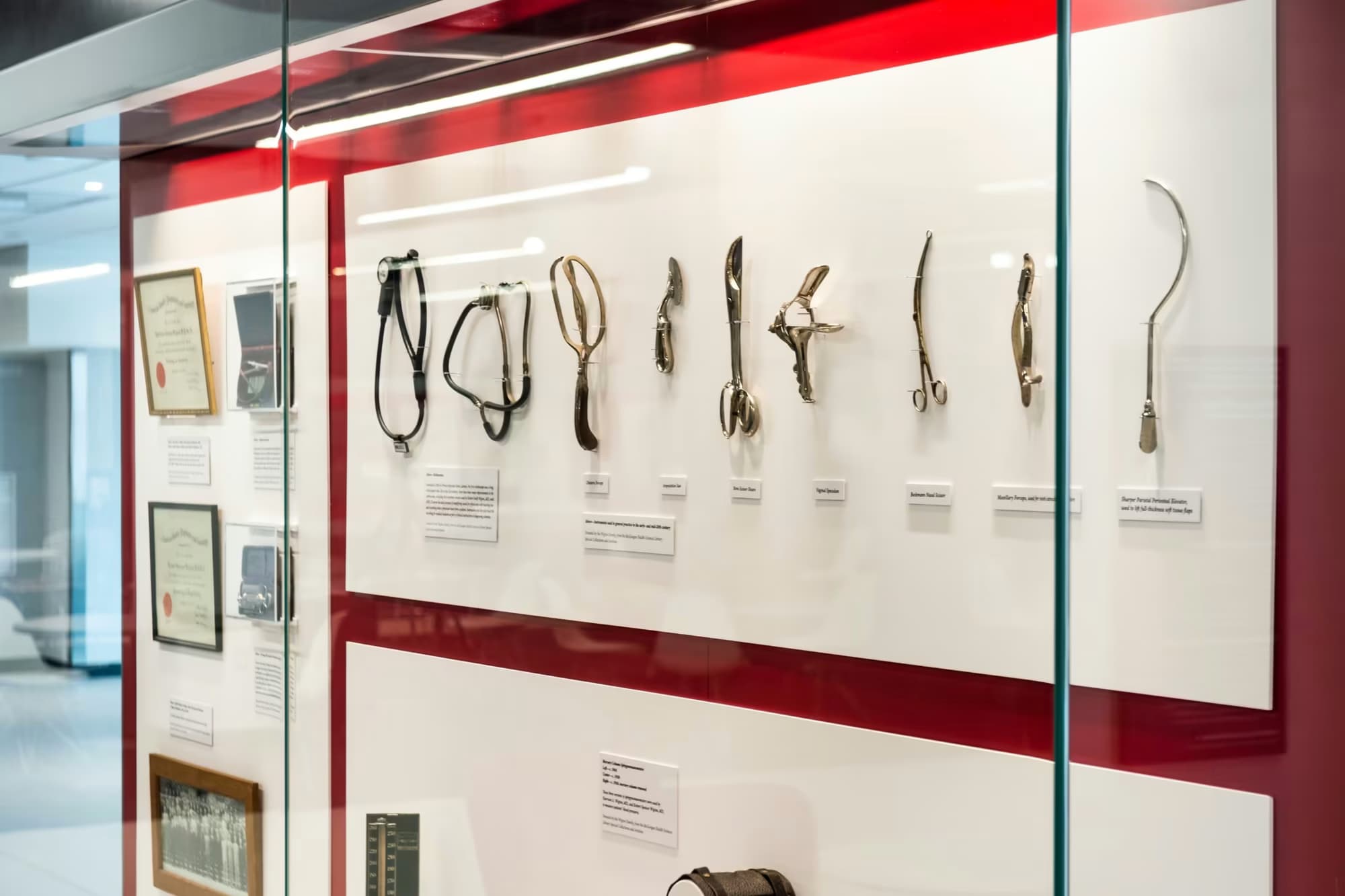
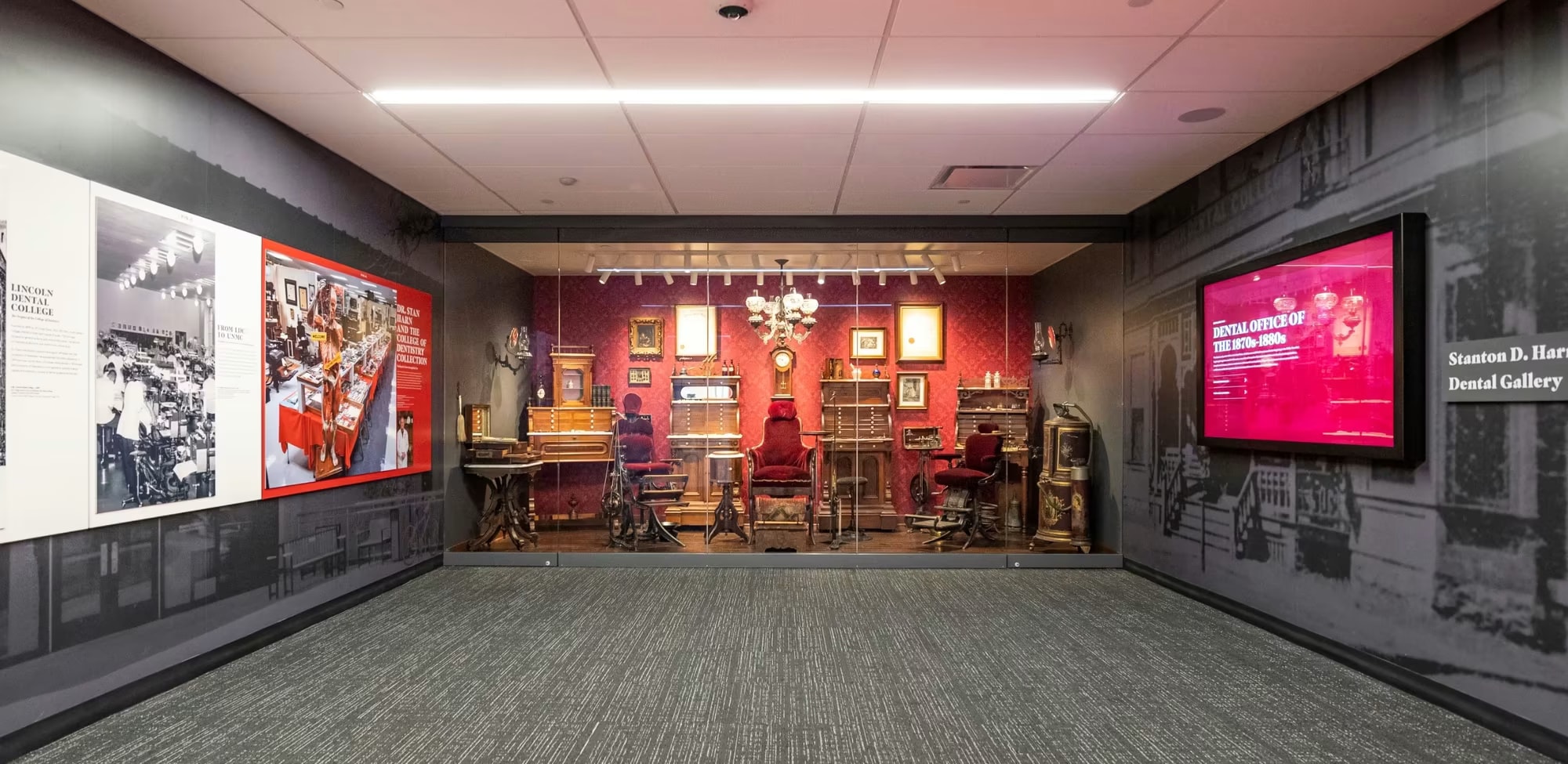
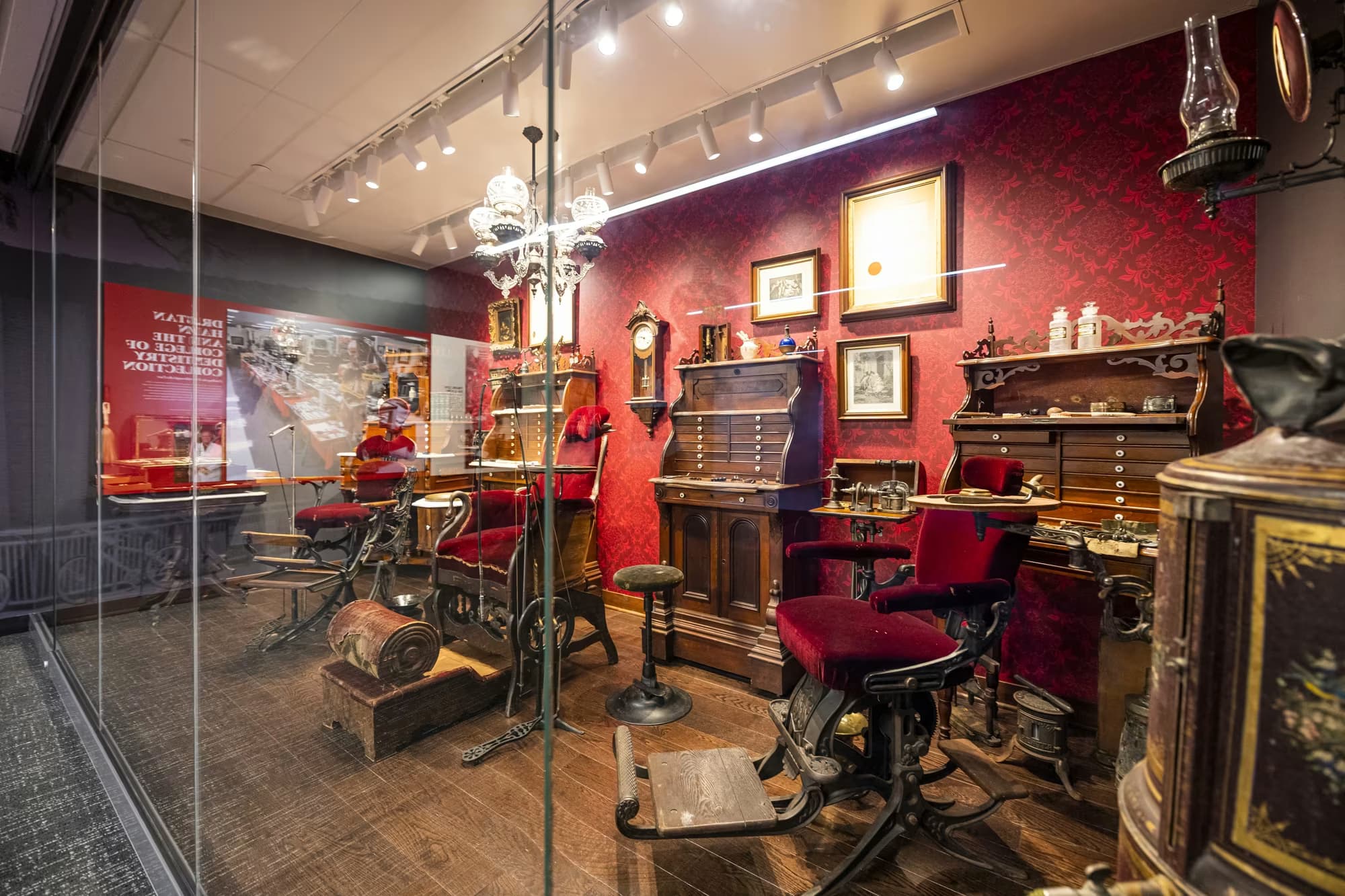
On the second floor, the exhibit shifts into a deeper and more immersive experience. Visitors encounter Civil War-era surgical tools, period medical instruments and a fully recreated 1870s dental office. These tactile, dimensional stories are supported by digital portals that give access to rare materials and interactive content—allowing guests to engage with UNMC’s history in personal and meaningful ways.

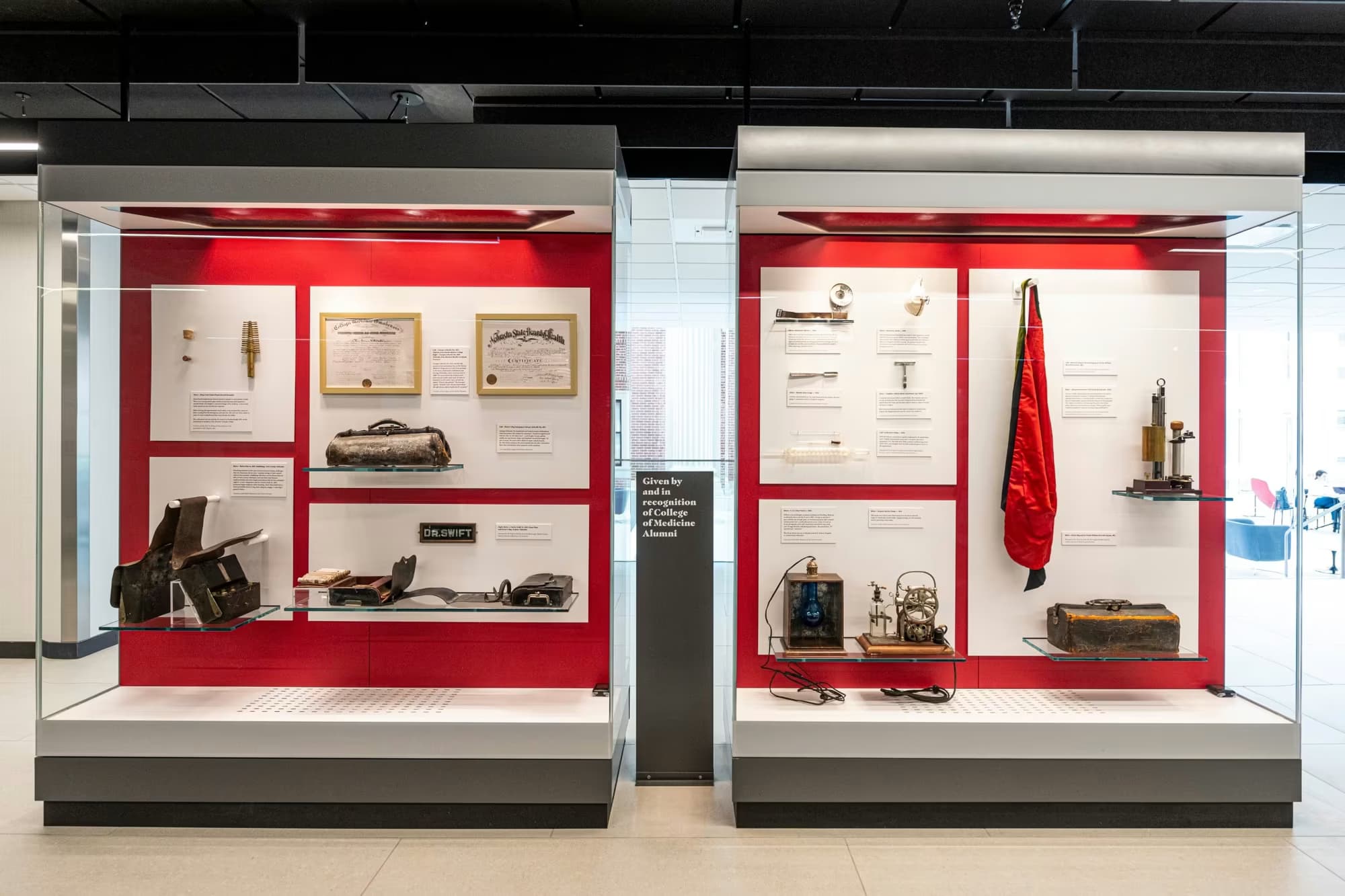
The third floor brings the experience to an executive level, showcasing rare books, medical texts and other archival treasures in museum-quality cases engineered for both preservation and flexibility. These displays were designed with university leadership in mind, offering a dignified and refined space for hosting guests, dignitaries and donors.

From early planning through final installation, DI supported UNMC’s fundraising goals by producing high-fidelity renderings and pitch materials that helped secure major donor investment. The end result is a flexible, future-proof experience that celebrates the University of Nebraska Medical Center’s legacy while supporting its ongoing mission of education and research.
  • Location


    Omaha, Nebraska

  • Experts


    Carole Hollman

  • Services


    Museum Exhibit Planning

    Immersive Technology

    Environmental Design

    Fundraising Support

  • Key Partners


    Haussman Construction

    HDR Architects

The First Floor

This high-traffic area, introduces visitors to UNMC’s mission and milestones through large-scale digital displays and graphic storytelling. These visually arresting moments were designed to immediately capture attention, acting as an open invitation to explore the space further.

The Second & Third Floors

The exhibit shifts into a deeper and more immersive experience. Visitors encounter Civil War-era surgical tools, period medical instruments and a fully recreated 1870s dental office. These tactile, dimensional stories are supported by digital portals that give access to rare materials and interactive content—allowing guests to engage with UNMC’s history in personal and meaningful ways.

The third floor brings the experience to an executive level, showcasing rare books, medical texts and other archival treasures in museum-quality cases engineered for both preservation and flexibility. These displays were designed with university leadership in mind, offering a dignified and refined space for hosting guests, dignitaries and donors.

From early planning through final installation, DI supported UNMC’s fundraising goals by producing high-fidelity renderings and pitch materials that helped secure major donor investment. The end result is a flexible, future-proof experience that celebrates the University of Nebraska Medical Center’s legacy while supporting its ongoing mission of education and research.
Slide 1 of 4

Impact

The McGoogan Library Wigton Heritage Center turns more than 150 years of medical history into an experience woven into daily campus life. Students passing between classes are drawn in by bold digital storytelling, families and visitors explore history up close, and university leaders have a refined space to welcome donors and dignitaries. DI’s fundraising materials helped secure the major investments that made it all possible. Flexible and built to last, the space celebrates UNMC’s legacy while inspiring the next generation of medical professionals.
Your next big idea starts here.

Let’s make your next project remarkable.