
 Close Overlay
Healthcare environments should be engaging, patient-centered spaces that promote comfort and positive experiences. By integrating healthcare experience design, immersive technology and custom fabrication, our designs provide positive entertainment that helps the patient journey. Whether enhancing pediatric clinics, waiting rooms or treatment spaces, we deliver innovative, human-focused solutions that make every healthcare visit feel more welcoming and caring.
Patient experience design can have a profound impact on the healing process. When patients feel more at ease in a healthcare environment, they are more likely to be calm and relaxed, which leads to better outcomes overall. This is especially true in pediatric and behavioral health situations, where patients are more likely to feel uneasy and nervous.
DI’s approach goes beyond aesthetics; we implement a holistic plan that considers the layout of the space, its features and the integration of interactive technology. The end result is a hospitality-inspired design that supports the health and overall well-being of patients, families and staff in equal measures. Examples of the work we can do for healthcare providers include:
What makes patient experience design different from traditional healthcare design?
How does DI collaborate with hospital staff during the design process?
Who are patient experience design solutions intended for?
What types of interactive environments can be customized for our space?
How does DI ensure safety and durability in branded healthcare environments?
Can technology be integrated into existing spaces without major renovations?
How do these experiences impact patient outcomes or satisfaction scores?
Immersive healthcare environments that feature technology can be extremely impactful when it comes to helping patients feel comfortable and engaged with their care. Integrating interactive tech elements into experiential healthcare designs is one of our specialties at Dimensional Innovations. By adding appropriate technologies such as gesture walls, projection mapping and augmented reality, we can help reduce anxiety and foster distraction-based therapy. We provide scalable tech platforms that are custom-branded and fully supported by our team post-install.
Every aspect of healthcare experience center design should support the patient journey. From the lighting used in waiting rooms to wayfinding signs used in hospital corridors, these elements should be thoughtfully considered regarding the effect they may have on patients’ moods. When balanced and tuned to specific age groups, clinical needs and/or brand voices, every square inch of a healthcare environment can serve a purpose in reducing anxiety and inspiring calm.
Our holistic approach to healthcare space design means we take nothing for granted. We know how important even the smallest elements of custom hospital interiors can be for improving patient outcomes. Our focus is on creating spaces that help patients every step of the way — spaces that are not just clinical but also foster an environment for learning and coping.
The custom fabrication capabilities DI brings to every project are a key part of what we have to offer. Because we’re not locked into working with off-the-shelf furniture or other design elements, we truly bring visions to life as completely as possible. From child-sized features for pediatric healthcare design to curved forms that bring a sense of calm to waiting areas, we deliver tactile design elements that support healing and exploration.
We work closely with healthcare professionals to ensure that whatever we fabricate fits into the overall plan for the space as well as its intended audience. Through our extensive capabilities, we create safe, cleanable and code-compliant pieces that don’t feel institutional. This can be extremely important for helping those receiving care feel more at ease so they can focus on their recovery.
Healthcare environments also need to meet the practical and emotional needs of families, caregivers and staff members, as well. One of the qualities that makes DI’s work stand out in this regard is our comprehensive strategy for creating and transforming these spaces so they support everyone. This means developing spaces that provide a sense of safety, offer help with emotional processing and make wayfinding as subconscious as possible.
Through features such as donor walls, shared storytelling zones and family lounges, we find ways to make healthcare environments feel as inclusive and compassionate as they can be. Our flexibility means we can design spaces for multiple audiences at the same time, emphasizing playfulness for children as well as accessibility for seniors and calm for overwhelmed parents.
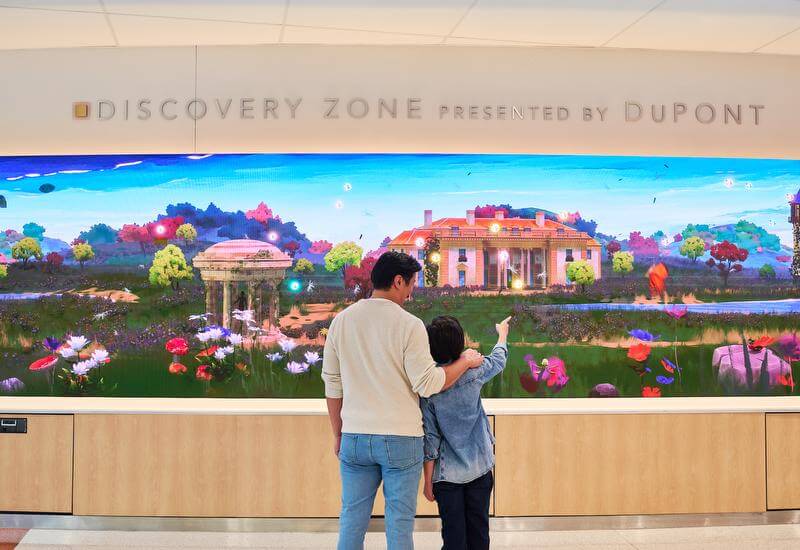 Nemours Children’s Health
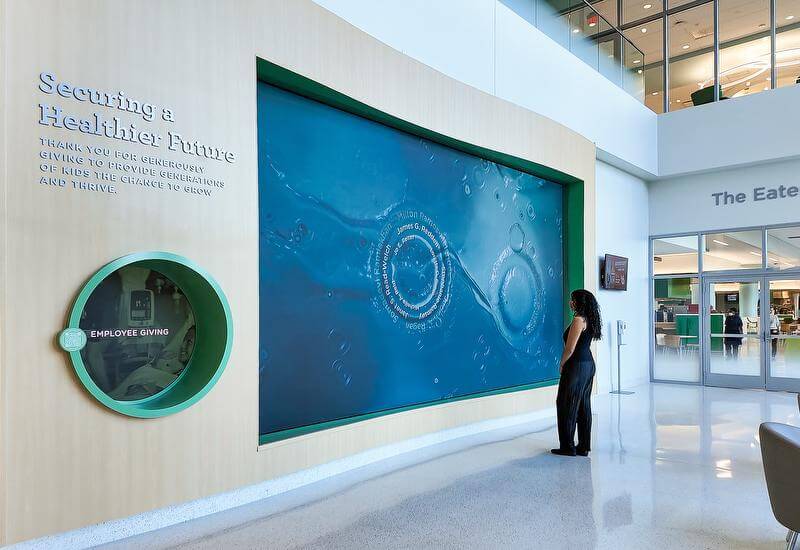 Children’s Healthcare of Atlanta
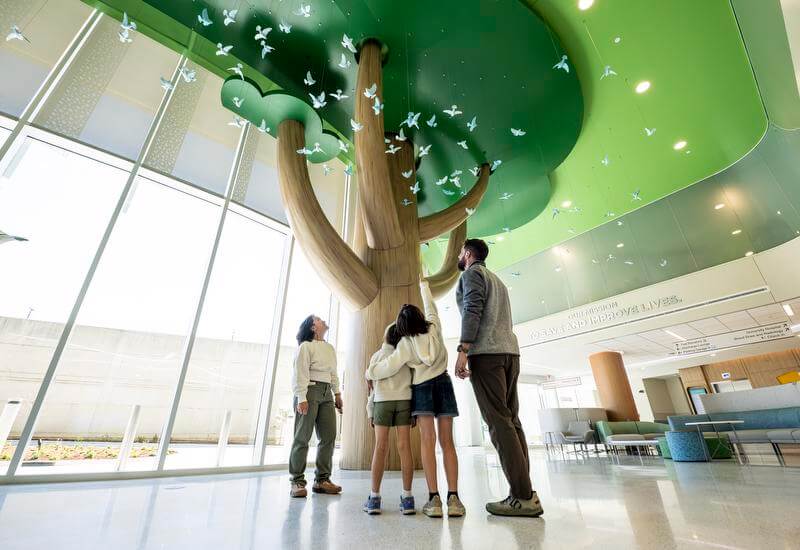 MU Children's Hospital
 Children’s Health of Orange County
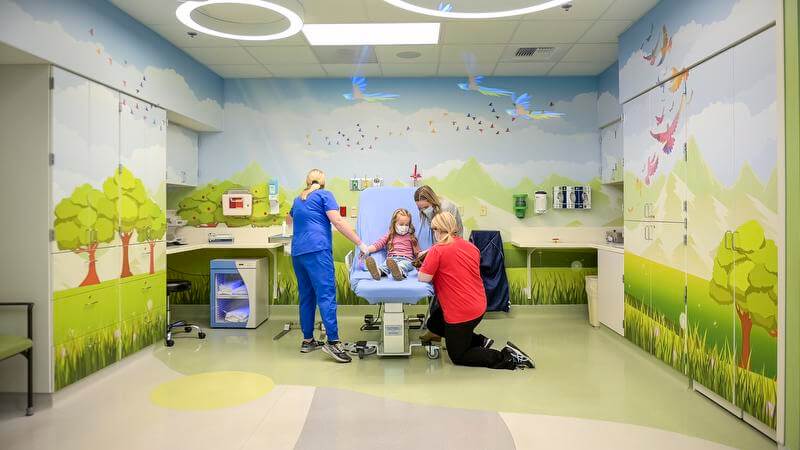 Children’s Mercy Kansas City Burn Clinic
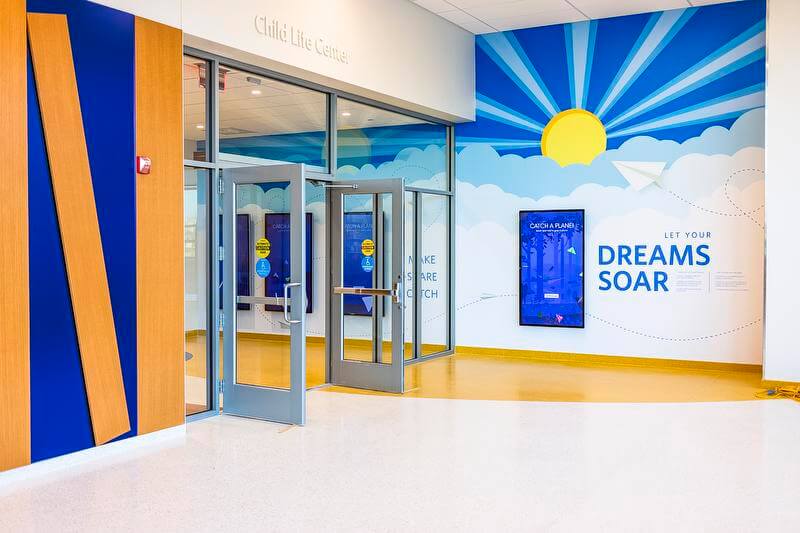 Children’s Wisconsin
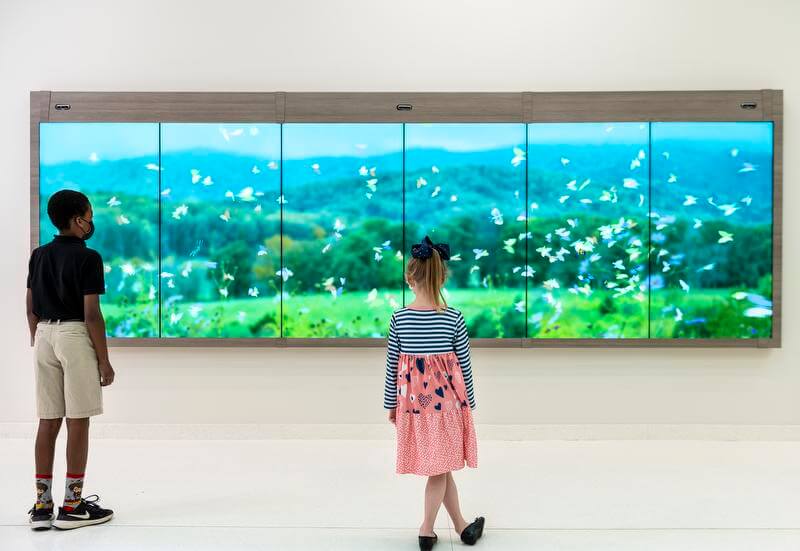 Carilion Children's Social Butterflies
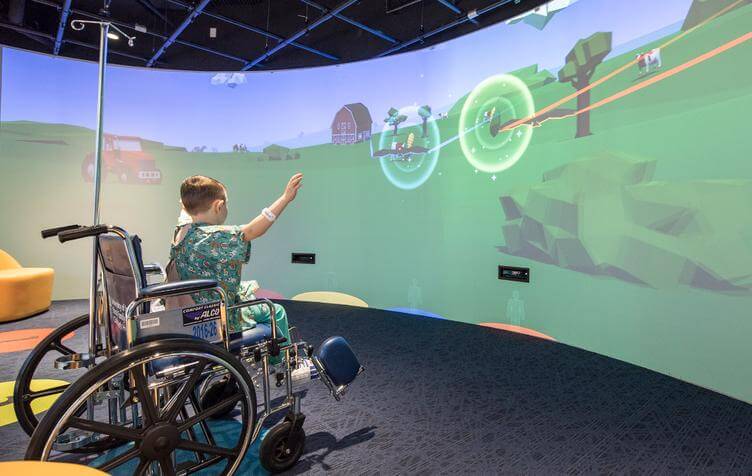 University of Iowa Stead Family Children's Hospital
 Cleveland Clinic Children's Hospital
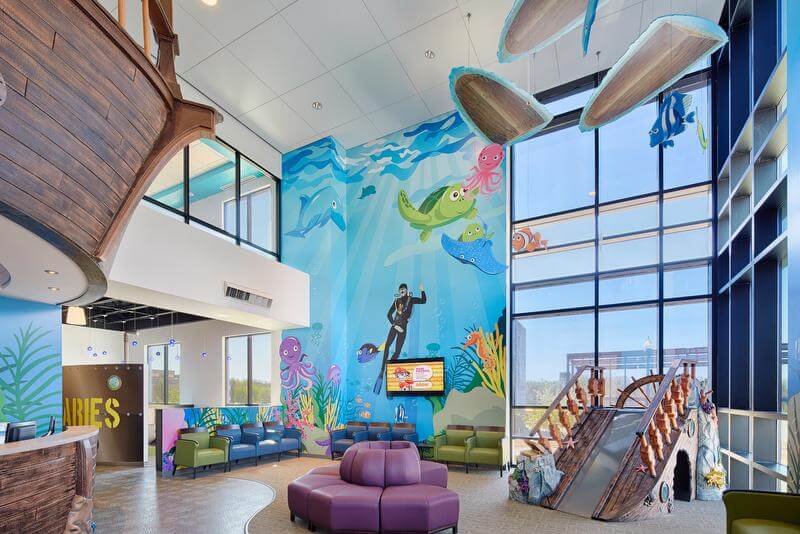 Dentistry for Children