
 Close Overlay
Research shows that positive distractions—especially in pediatric settings—can reduce stress, ease pain perception and improve overall well-being. That’s why we design interactive experiences that give patients a sense of comfort in a situation that often feels overwhelming.
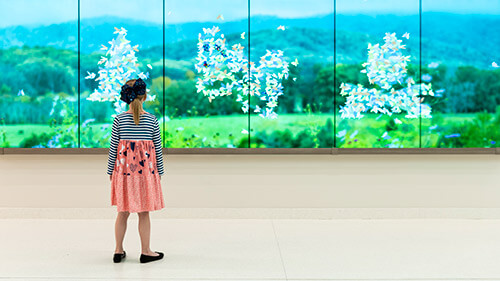
Whether it’s a butterfly digital art wall where kids can create and release their own virtual butterflies, an interactive coloring wall that uses gesture-tracking to bring artwork to life, or Creatureverse, an immersive ecosystem where children design and interact with their own digital creatures, our technology-driven and child-friendly hospital environments provide patients with a much-needed escape.
At Kansas City’s Children’s Mercy Burn Clinic, we’ve crafted soothing digital landscapes where patients choose their own calming visuals and music, offering a moment of peace during treatment. These interactive experiences for children in hospitals aren’t just distractions—they are meaningful interventions that reduce anxiety and make hospitals feel a little less intimidating.
Positive distractions are intentional environmental designs intended to redirect attention away from stress, discomfort, or clinical procedures. By creating engagement, promoting immersion, and giving patients choice and control, these elements help patients feel more comfortable in unfamiliar or intimidating environments, such as hospitals. Distractions can be passive, such as TVs or murals, or interactive, as in the case of gesture-based walls or responsive environments. The latter provides more effective interventions by encouraging participation and deeper cognitive diversion.
Interactive hospital experiences can be tailored to specific age groups. Pediatric patient engagement solutions may focus on play-based interaction, while distractions aimed at older patients may focus more on calming or sensory regulation.
DI creates hospital patient experience solutions that go beyond simple aesthetic enhancements, creating environments that are integrated into the care experience to support patient comfort and improve overall environmental perception. Our expertise in leveraging multisensory, patient-centered design means we develop immersive environments that feel more human-centered and less clinical.
DI takes an end-to-end approach to positive distractions, integrating patient experience design, content creation, and immersive technology. Our experiential healthcare design team works closely with hospitals to align with their care goals, understand their patient demographics, map key stress points, and identify opportunities for intervention. The goal is to build cohesive environments rather than a group of standalone features.
We believe customization is key to success, which is why we never try to force clients into accepting one-size-fits-all installations. We also strive to make what we create easily refreshable, with interactive systems and CMS-driven content that allow hospitals to update visuals, themes, and experiences over time. Our team always keeps the context of healthcare facilities in mind, choosing materials and hardware that are reliable and easy to clean and maintain. DI can create experiences that scale from a single touchpoint to fully immersive rooms or multi-area ecosystems. We present a unified solution for designing, building, installing, and supporting these systems.
These are environmental features or experiences purposefully designed to redirect patients’ attention away from stress, discomfort, or clinical procedures, helping them feel more comfortable. Some common positive distraction examples are interactive digital walls, immersive patient rooms, projection-based environments, and calming visual content. Although these are most often used in pediatric care settings, these experiences can also be adapted for adult care, behavioral health, and specialty clinics where reducing patient anxiety and improving the patient experience are important.
These installations help shift a patient’s focus away from stressors such as clinical procedures, wait times, or anticipation of discomfort. In particular, interactive elements give patients a sense of agency and participation, helping them feel more in control. Multi-sensory environments combine visual, auditory, and responsive elements to support relaxation, encourage emotional regulation, and create a calmer environment.
A range of environments can be ideal settings for positive distractions in a hospital. These include waiting areas, patient rooms, treatment rooms, corridors, and spaces where families and patients spend extended time. They can be most effective for high-stress touchpoints such as pre-treatment areas, procedure rooms, or recovery spaces. They can be standalone installations, such as interactive walls, or integrated throughout a facility for a more cohesive, experience-driven environment.
Yes, these can be tailored to specific patient demographics, clinical contexts, and spatial constraints. This ensures their relevance for various age groups, conditions, and care environments. For instance, pediatric-focused therapeutic distraction environments can prioritize imagination and creativity, whereas adult or behavioral health settings may want to emphasize sensory regulation or calming environments. DI can adjust content, interaction complexity, and responsiveness to patients’ abilities and needs.
Many of our systems feature content management capabilities, allowing healthcare teams to update visuals, themes, and experiences over time. This can be done without replacing the entire system. Our ongoing service, monitoring, and technical support help ensure installations remain functional, reliable, and aligned with the operational needs of healthcare clients. Regular updates for different seasons, themes, or programs help keep these experiences fresh.
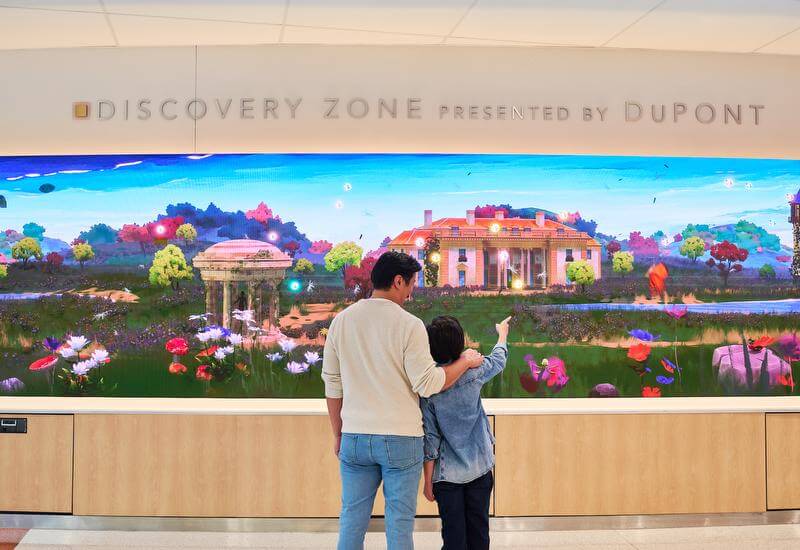 Nemours Children’s Health
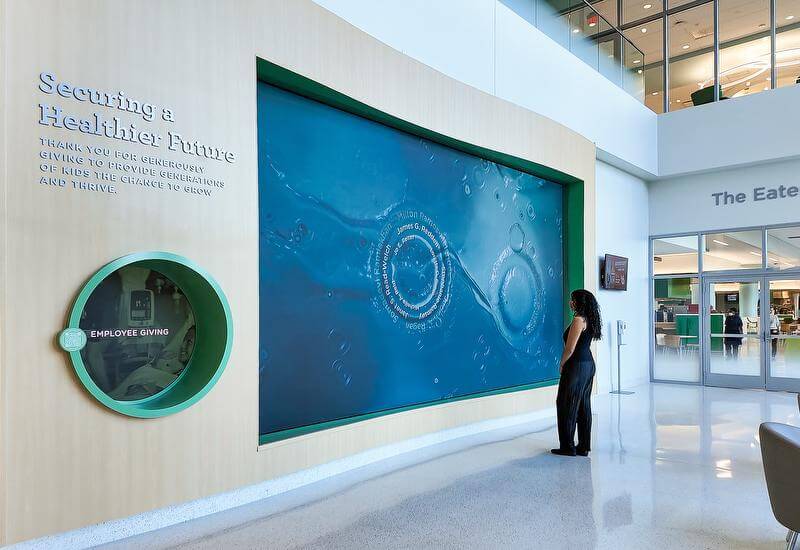 Children’s Healthcare of Atlanta
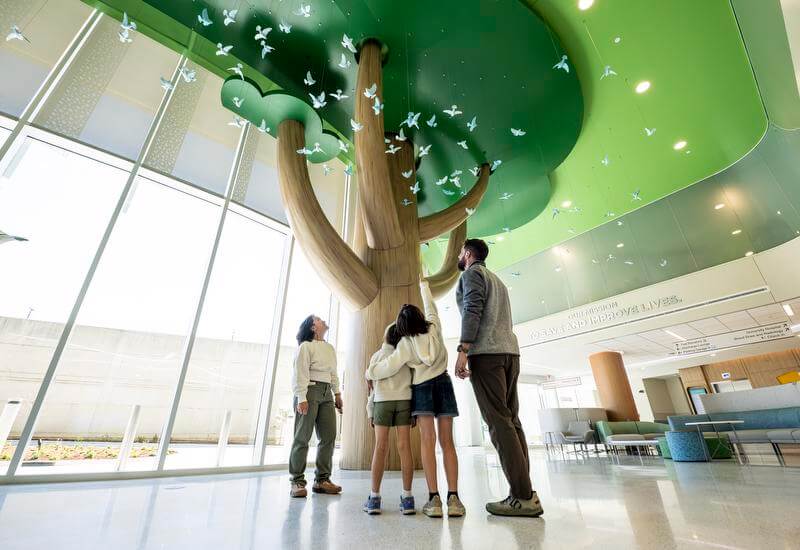 MU Children's Hospital
 Children’s Health of Orange County
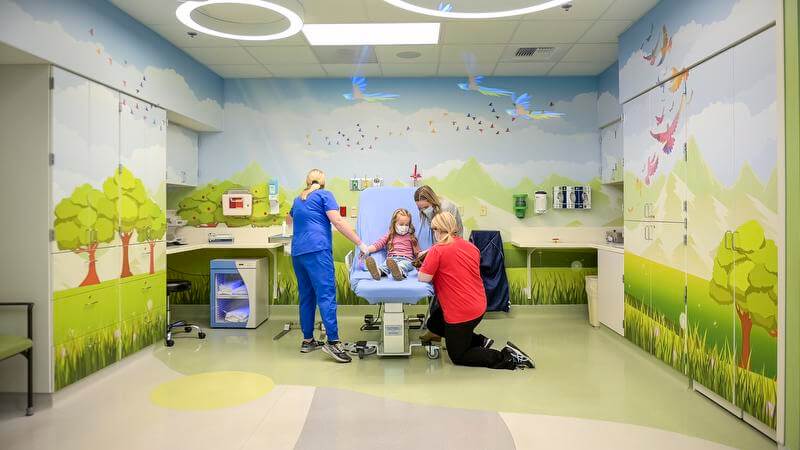 Children’s Mercy Kansas City Burn Clinic
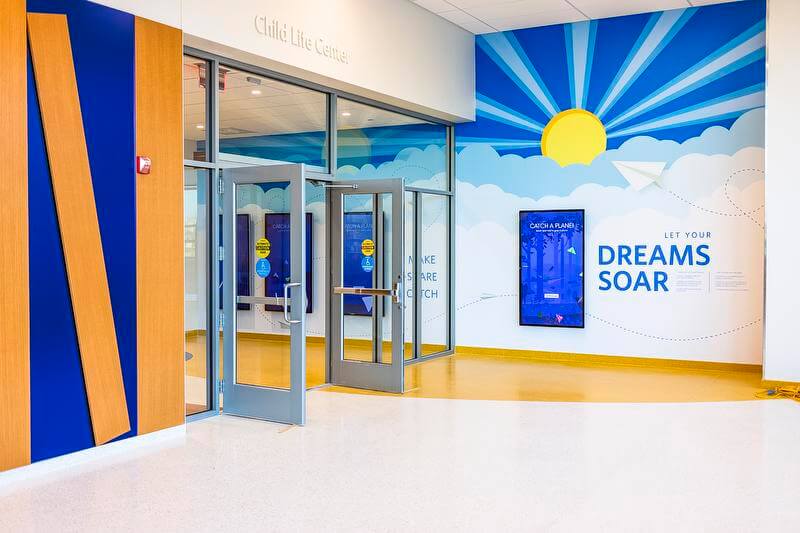 Children’s Wisconsin
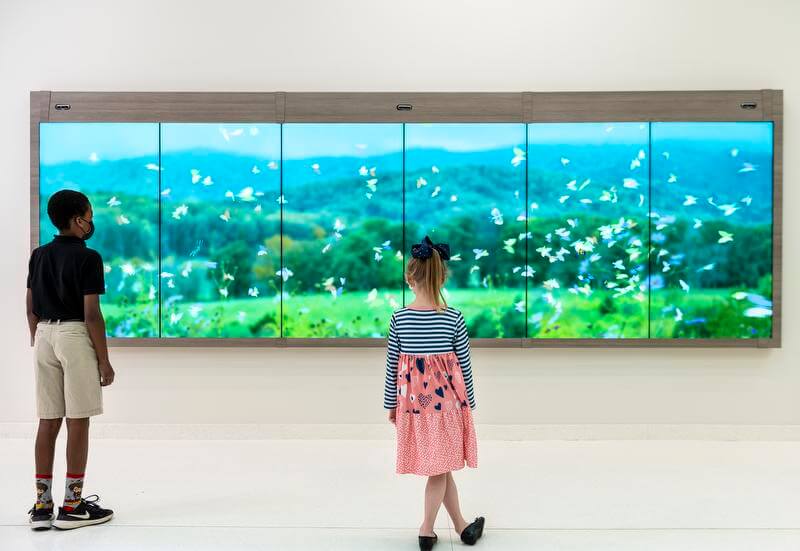 Carilion Children's Social Butterflies
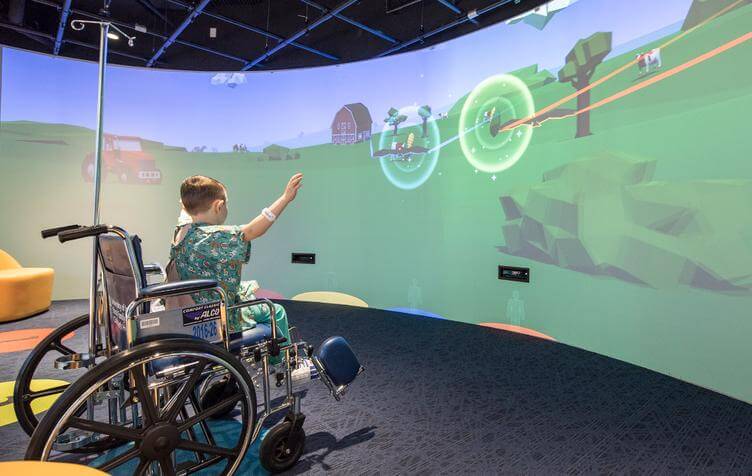 University of Iowa Stead Family Children's Hospital
 Cleveland Clinic Children's Hospital