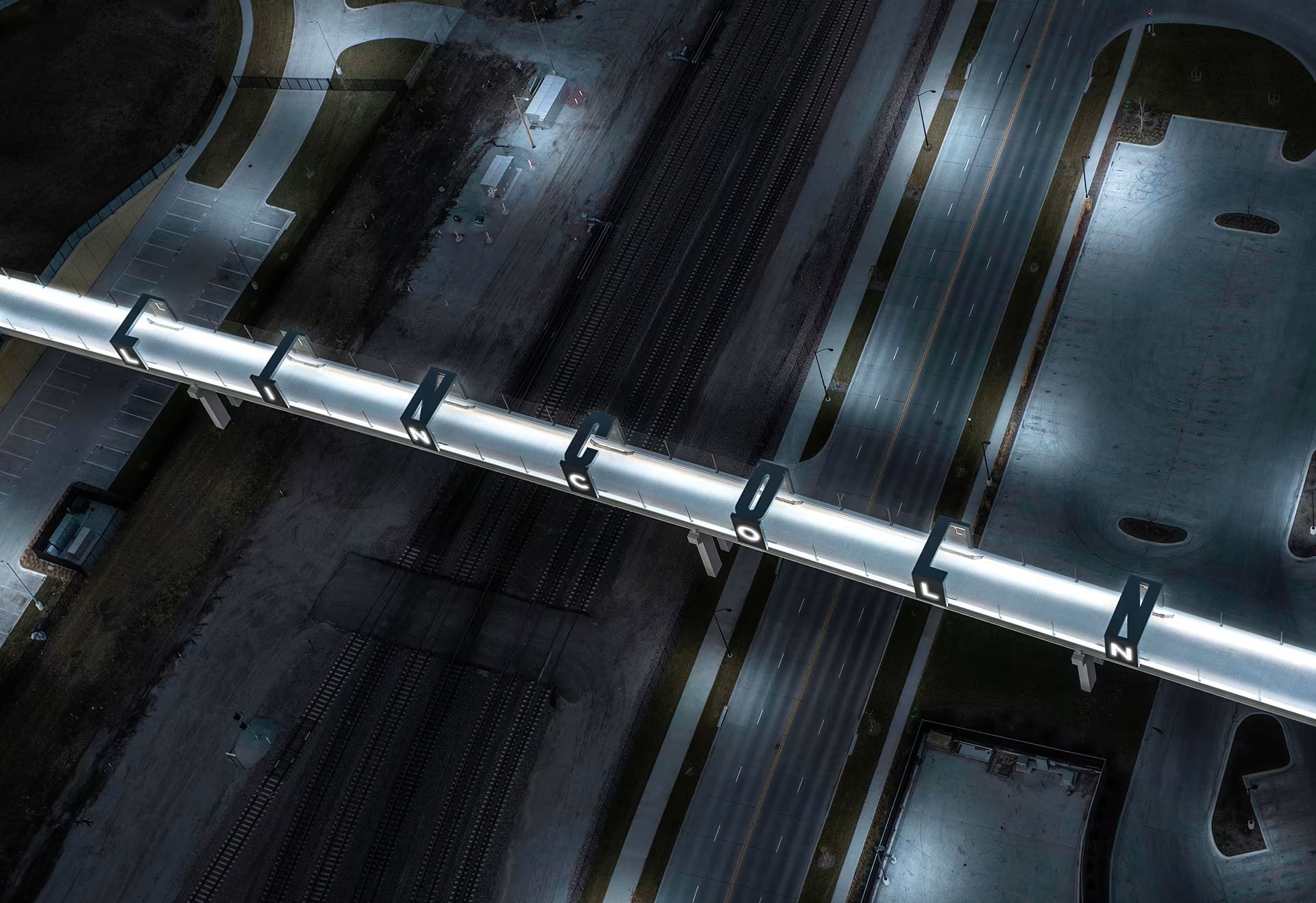
DI transformed the 611-foot Haymarket Pedestrian Bridge with 18-foot-tall steel letters spelling “Lincoln” across the span, readable from the street and from aerial broadcast views. Built from 43 tons of steel and lit by more than 6,000 LEDs, the bridge shines day and night. Quotes from notable Nebraskans are embedded within each letter, celebrating the city’s cultural heritage.
Challenge
Lincoln wanted a high‑visibility landmark that would stand out during nationally televised University of Nebraska football games. The existing pedestrian bridge was functional but lacked identity, emotion, and civic pride. The city needed a design that would be legible from the sky, memorable to commuters, and capable of representing Lincoln’s cultural history.
SOLUTION
Dimensional Innovations transformed the 611‑foot pedestrian bridge into a bold civic identifier by engineering 18‑foot‑tall steel letterforms that spell “Lincoln” across the span, creating a landmark legible from both street-level and aerial broadcast views. The team fabricated the structure using 43 tons of steel and integrated more than 6,000 LED lights to ensure the bridge remains a vibrant visual beacon day and night. Storytelling elements were woven into the design through quotes from notable Nebraskans, embedded within each letter to celebrate the city’s cultural heritage. By placing letterforms on both sides and the top of the bridge, Dimensional Innovations maximized visibility for commuters and televised audiences alike, turning a utilitarian crossing into a piece of civic infrastructure that blends engineering, placemaking, and community identity.
Impact
The Haymarket Pedestrian Bridge has become one of Lincoln’s most recognizable icons. On game days, it greets national television audiences from above, putting the city’s name in front of millions of football fans. For commuters, it’s a daily source of pride, and for those who stop to read the quotes, a reminder of the Nebraskans who shaped the city’s story. Glowing after dark and bold by day, the bridge shows how engineering, placemaking and storytelling can turn everyday infrastructure into a lasting expression of community identity.