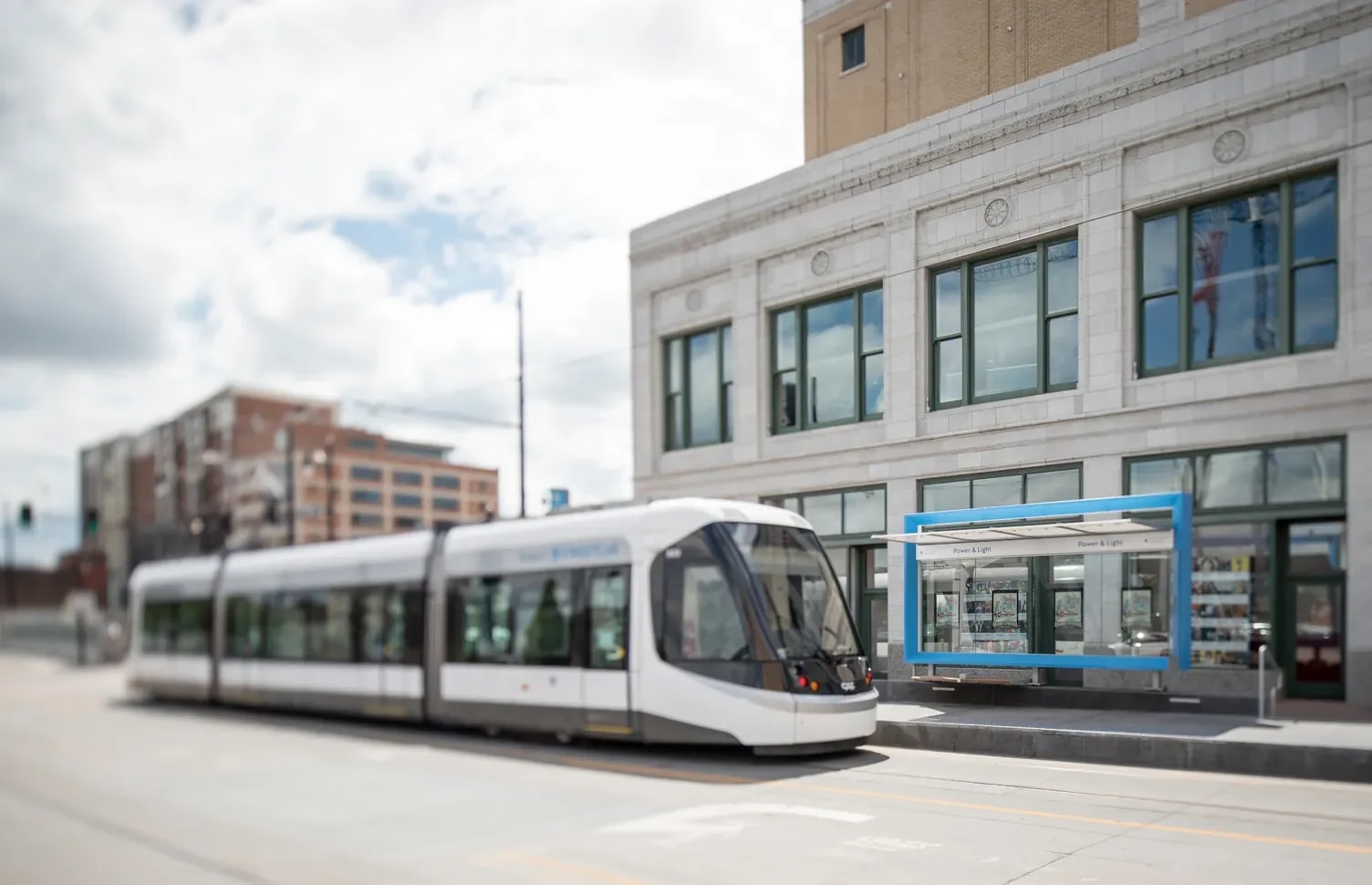
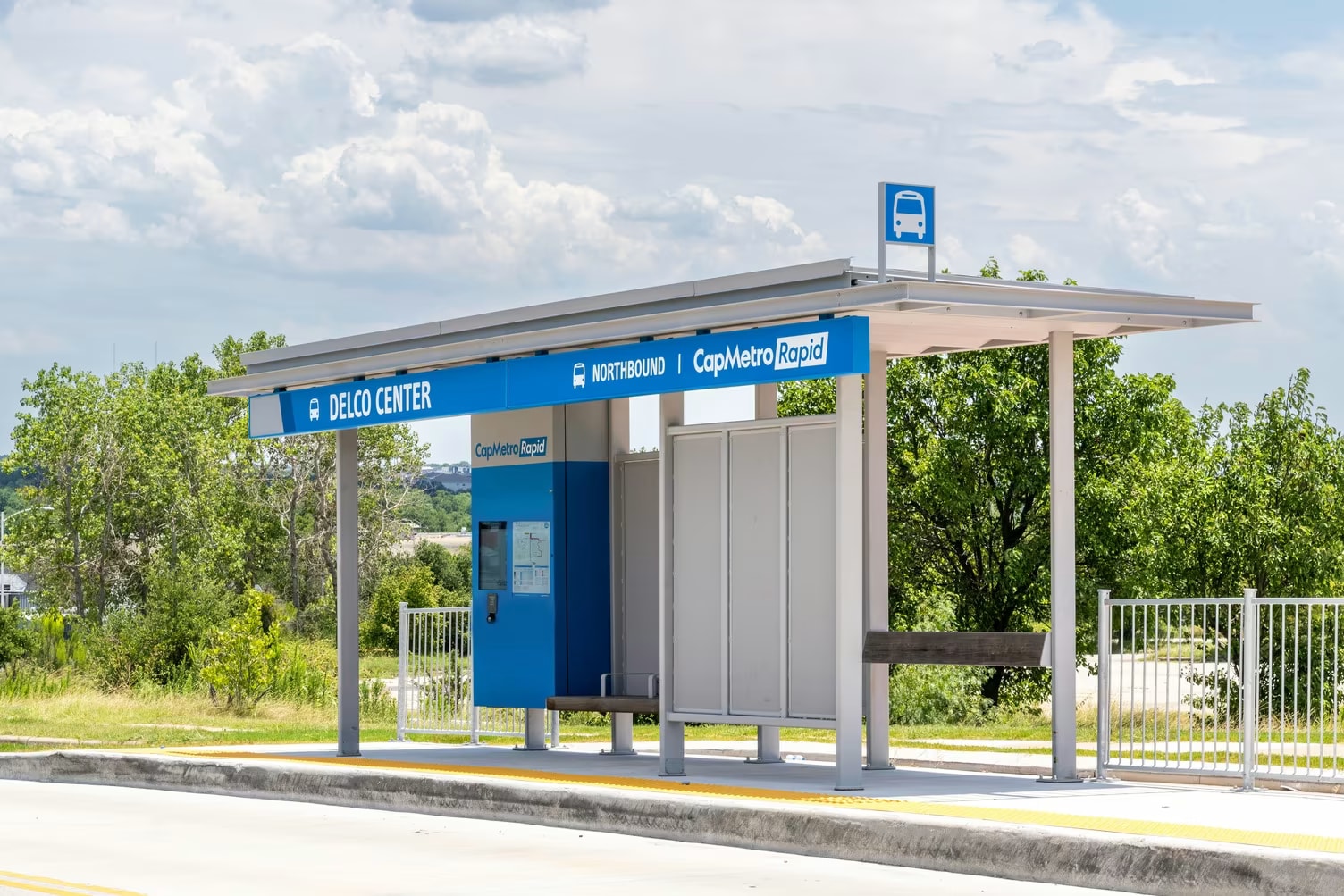
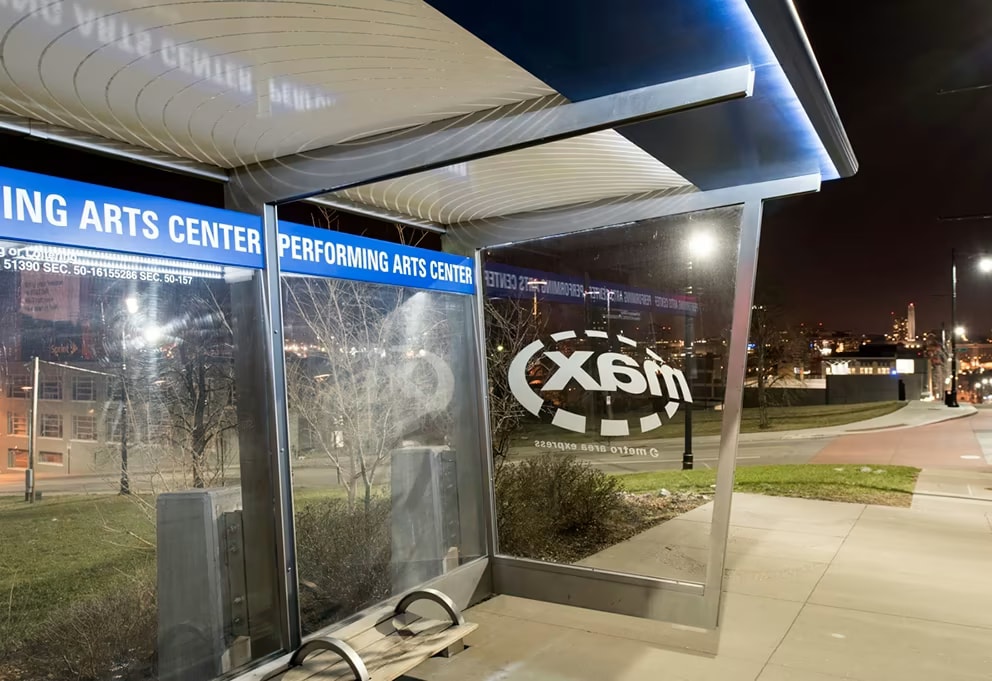
DI partnered with HNTB and Cyntergy to bring modern AERO Bus Rapid Transit stations to Tulsa’s Peoria corridor. Two station types, “Constrained” for tight spaces and “Standard” for larger sites, offer sheltered seating, bicycle racks, level boarding and real-time arrival signs.
Challenge
As Tulsa launched AERO Bus Rapid Transit, it needed new stations that would make public transit more modern, convenient and connected for residents. The stations had to fit a wide range of conditions along Peoria Avenue, from tight, space-constrained sidewalks to larger sites with room for more amenities, while still delivering a consistent, recognizable experience for riders at every stop.
SOLUTION
DI worked closely with design and architecture firms HNTB and Cyntergy to bring two station types to life along the Peoria corridor. “Constrained” stations use a minimal footprint to fit along narrow stretches of the avenue, while “Standard” stations offer a larger footprint and more amenities. Both provide riders with sheltered seating, bicycle racks and level boarding for easier access, along with real-time arrival signs that keep commuters informed and on schedule.
Impact
AERO has given Tulsa a faster, more comfortable and more connected way to travel along one of its busiest corridors. Riders can wait in sheltered comfort, bring their bikes along, board easily at platform level and know exactly when their bus will arrive. With two flexible station designs, every stop delivers the same modern experience, no matter how much space it has. DI helped MetroLink Tulsa create stations that make public transit an easier, more appealing choice for the whole community.